
305-468-3314

3650 NW 82nd Avenue, Suite 502, Miami, FL 33166


Kidney Cancer HCA Kendall
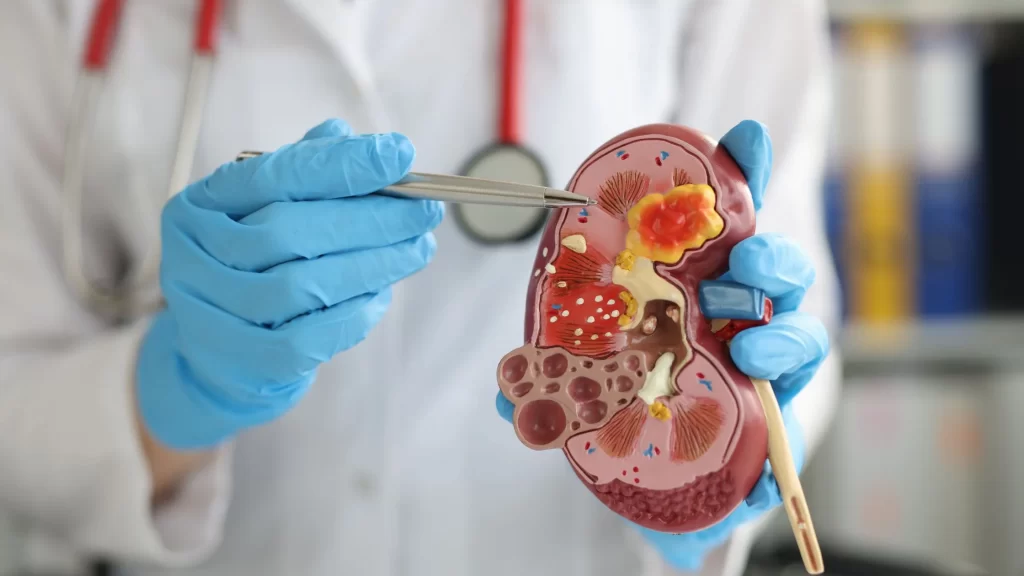
A kidney cancer diagnosis can feel overwhelming, especially when you’re also trying to figure out where to get care. If you live in or near Kendall, you don’t have to go far: Dr. Shirin Razdan, a board-certified urologic oncologist and robotic surgeon, treats kidney cancer patients from throughout the Kendall area at her Miami practice. The numbers are genuinely encouraging — the 5-year relative survival rate for kidney cancer caught while still confined to the kidney is 93.3%, and roughly two-thirds of cases are diagnosed at exactly that early, most treatable stage.
This guide covers what kidney cancer is, how it’s diagnosed and treated, and what to expect if you’re facing this diagnosis — with a specialist close to home for kidney cancer care.
Kidney Cancer: Quick Facts
| Statistic | What the Data Shows |
| New U.S. cases annually | About 80,450, making it one of the 10 most common cancers nationwide |
| Diagnosed at localized stage | About 65.7% of cases — meaning the cancer hasn’t spread beyond the kidney |
| 5-year survival, localized stage | 93.3% |
| 5-year survival, all stages combined | 79.2% |
| Sex distribution | About twice as common in men as in women |
| Typical age | Uncommon under 45; most cases diagnosed in older adults |
| How many cases are found incidentally | A substantial share are discovered during imaging ordered for an unrelated issue |
What Is Kidney Cancer?
Kidney cancer, most often renal cell carcinoma, begins when cells in the kidney — the organ responsible for filtering waste and excess fluid from your blood — start growing uncontrollably and form a tumor. Because early kidney cancer typically causes no symptoms, many cases are first found incidentally during a scan ordered for something else entirely. Catching it at this stage is exactly why the localized survival rate is so high: the cancer is confined, hasn’t had the chance to spread, and responds very well to treatment.
Symptoms of Kidney Cancer
- Blood in the urine
- Unexplained weight loss
- Persistent pain in the back or side
- A noticeable lump in the abdomen or side
- Fatigue
- Fever that doesn’t resolve
- High blood pressure that’s new or difficult to control
Because these symptoms overlap with other, less serious conditions, they’re easy to dismiss — but persistent or combined symptoms deserve a proper medical evaluation rather than being written off.
What Happens at Your First Appointment
- Medical history review: A detailed look at your symptoms, risk factors, and any prior imaging you’ve had
- Physical exam and lab work: Blood and urine tests to assess kidney function and look for signs consistent with cancer
- Imaging: CT scan, MRI, or ultrasound to characterize the mass and plan next steps
- Treatment discussion: A clear explanation of your diagnosis, the options available, and the benefits and trade-offs of each, so you can make an informed decision alongside your care team
Treatment Options for Kidney Cancer
| Treatment | What It Involves | Best For |
| Active surveillance | Regular imaging to monitor a small tumor without immediate treatment | Small, slow-growing tumors, particularly in older patients |
| Partial nephrectomy | Removal of only the cancerous portion, preserving healthy kidney tissue | Tumors where kidney function preservation is a priority |
| Radical nephrectomy | Removal of the entire kidney and surrounding tissue | Larger or more centrally located tumors |
| Robotic nephrectomy | Minimally invasive surgery using robotic instrumentation for enhanced precision | Most appropriately selected partial and radical nephrectomy candidates |
| Single Port robotic surgery | The procedure performed through one small incision | Patients seeking the least invasive surgical option appropriate for their tumor |
For cancer that has spread beyond the kidney, systemic treatments — chemotherapy, immunotherapy, and targeted drug therapy — may be part of a broader treatment plan, typically coordinated between your surgeon and a medical oncology team. Our guide to kidney cancer treatment options covers how these pieces fit together depending on your specific diagnosis and stage.
Why Surgical Experience Matters
Robotic and Single Port kidney surgery require specialized training beyond standard surgical residency, and outcomes are closely tied to how much experience a surgeon has with these specific techniques. Our guide on why choosing a high-volume robotic kidney surgeon improves long-term cancer outcomes explains what to look for and what questions to ask any surgeon you’re considering for kidney cancer treatment.
Recovery After Kidney Cancer Surgery
- Hospital stay: Typically 2 to 3 days after robotic surgery, often shorter than after traditional open surgery
- Early recovery: Light activity within a couple of weeks for most patients
- Full recovery: Generally several weeks, depending on the extent of surgery and your overall health
- Follow-up care: Regular imaging to monitor kidney function and watch for any recurrence
If you’re wondering what your specific diagnosis means for the road ahead, our article on whether kidney cancer is curable walks through how stage, tumor type, and overall health factor into long-term outlook.
Kidney Cancer Care for the Kendall Community
Patients throughout Kendall and surrounding western Miami-Dade communities deserve access to specialized, board-certified urologic oncology care without an unnecessary drive across town. Dr. Razdan brings advanced robotic and Single Port surgical expertise to patients in this area, with a focus on personalized treatment planning and continuity of care from your first consultation through recovery and follow-up.
Frequently Asked Questions
What treatment options are available for kidney cancer?
Options include active surveillance, partial or radical nephrectomy (often performed robotically), ablation for select small tumors, and systemic treatments like targeted therapy or immunotherapy for cancer that has spread. The right choice depends on tumor size, location, and your overall health.
What are the symptoms of kidney cancer?
Common symptoms include blood in the urine, unexplained weight loss, pain in the back or side, a lump in the abdomen, fatigue, fever, and new or difficult-to-control high blood pressure. Many cases have no symptoms at all in the early stages.
Is kidney cancer usually treated with surgery alone?
For cancer confined to the kidney — which describes roughly two-thirds of diagnoses — surgery (often robotic partial or radical nephrectomy) is frequently the primary and sometimes only treatment needed. More advanced cases may require a combination of surgery and systemic therapy.
What happens if kidney cells grow uncontrollably?
Uncontrolled growth forms a tumor that, if untreated, can eventually spread (metastasize) to other organs such as the lungs, liver, or bones — which is why earlier detection and treatment are strongly associated with better outcomes.
How long is the hospital stay after kidney cancer surgery?
With robotic surgery, most patients stay 2 to 3 days, which is typically shorter than the stay required after traditional open surgery.
How common is kidney cancer?
It’s one of the 10 most common cancers in the U.S., with roughly 80,450 new cases diagnosed annually, and it’s about twice as common in men as in women.
Will my kidney function be affected after surgery?
A partial nephrectomy preserves as much healthy kidney tissue as possible and generally has less impact on long-term kidney function than removing the entire kidney, which is why it’s preferred whenever the tumor allows for it.
Should I get a second opinion on my kidney cancer diagnosis or treatment plan?
Yes — a second opinion is considered good practice for any cancer diagnosis and can help confirm your diagnosis, clarify your options, and give you more confidence moving forward, regardless of which provider you ultimately choose.