


Male stress urinary incontinence (SUI)—the involuntary loss of urine during physical exertion, coughing, laughing, or standing—is one of the most distressing long-term survivorship complications men face following prostate surgery, radiation therapy, or pelvic trauma. While many men regain urinary control naturally or with targeted pelvic floor physical therapy within the first year after surgery, a substantial cohort experiences persistent, treatment-resistant leakage.
Living with ongoing incontinence often forces men into chronic pad dependency, social withdrawal, emotional anxiety, and physical skin breakdown. When conservative measures fail to provide relief, modern reconstructive urology offers definitive, permanent surgical cures.
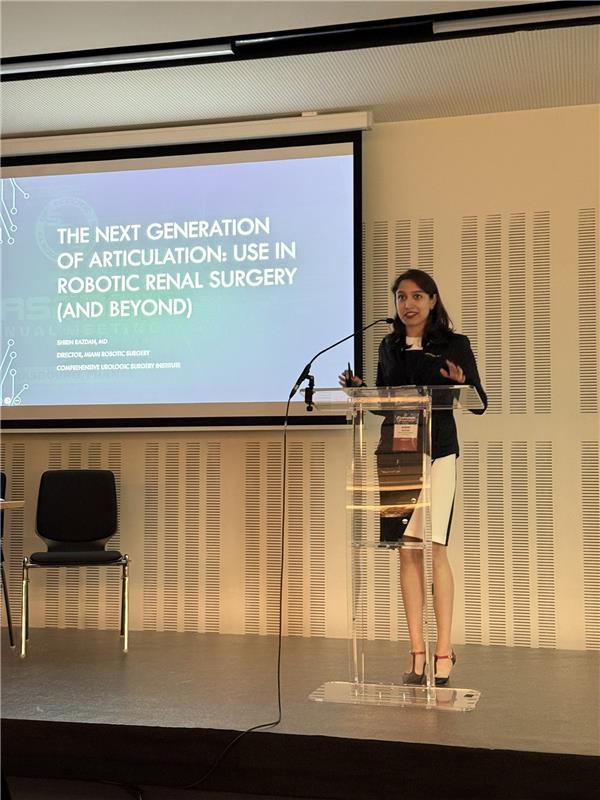
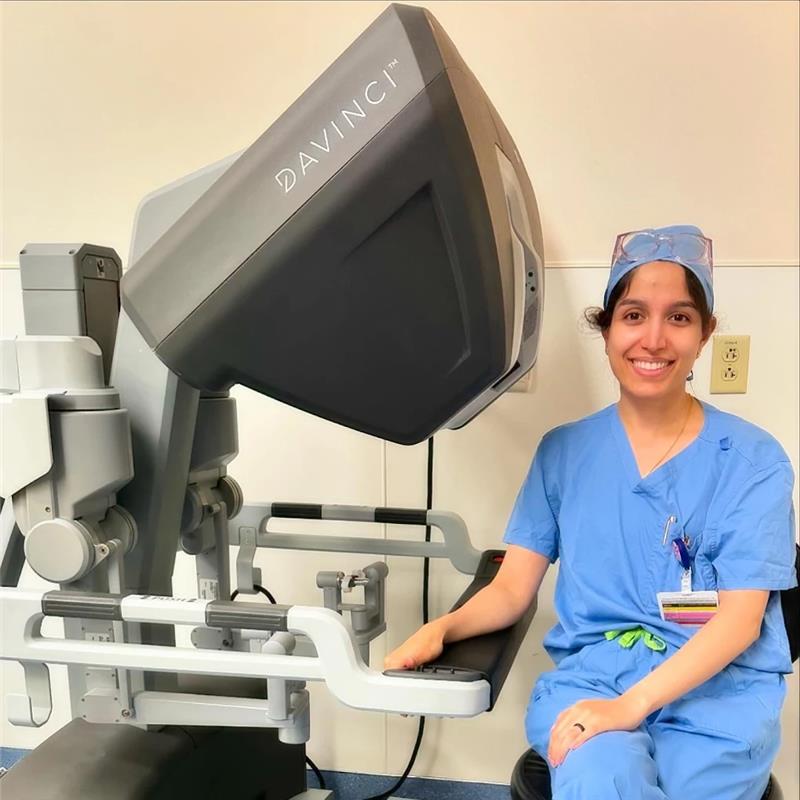
Practicing at Miami Robotic Surgery within the Comprehensive Urologic Surgery Institute in South Florida (miamiroboticsurgery.com), Dr. Shirin Razdan is a fellowship-trained robotic and prosthetic urologic surgeon. Having completed advanced subspecialty training at the Icahn School of Medicine at Mount Sinai in New York, Dr. Razdan specializes in the full continuum of post-prostatectomy survivorship care. By evaluating individual leakage severity, anatomical structural integrity, and previous pelvic radiation history, Dr. Razdan guides men through the modern surgical landscape: male transobturator slings for mild-to-moderate incontinence and the Artificial Urinary Sphincter (AUS) for severe, total urinary leakage.
The Spectrum of Post-Prostatectomy Stress Incontinence
The male urinary continence mechanism relies on the intrinsic urethral sphincter—a complex circular muscular valve surrounding the membranous urethra—supported by the pelvic floor hammock. During radical prostatectomy or pelvic radiation, several mechanical and neurological changes can induce SUI:
┌──► 1. Intrinsic Sphincteric Deficiency (ISD)
│ (Direct surgical trauma, traction, or thinning of sphincter muscle)
│
[POST-PROSTATECTOMY SUI CAUSES] ──┼──► 2. Hypermobility of the Membranous Urethra
│ (Loss of natural supportive fascial attachments & pelvic floor drop)
│
└──► 3. Radiation-Induced Fibrosis
(Ischemia and non-compliant scarring around the urethral lumen)
Determining the precise surgical pathway begins with an objective assessment of severity:
- Mild Incontinence: 1 to 2 light pads per day; leakage primarily during strenuous exercise or heavy lifting.
- Moderate Incontinence: 2 to 4 moderate-to-heavy pads daily; leakage during routine daily activities like walking or standing up from a chair.
- Severe Incontinence: Continuous, gravity-dependent leakage, often requiring 5 or more soaked pads per day or continuous diaper/clamp usage.
Option 1: The Male Synthetic Sling (Transobturator Retroluminal Sling)
For men with mild-to-moderate stress incontinence and a functional residual sphincter mechanism, the male sling provides a passive, non-mechanical solution.
[Small Perineal Incision] ──► Polypropylene Mesh Positioned Under Bulbospongiosus Muscle
│
▼
[Anchor Through Obturator Foramina] ──► Cranial Elevation & Compression of Bulbar Urethra
│
▼
[Passive Support Restored] ──► Increases coaptation zone without manual pump activation
How the Male Sling Functions:
- Elevating the Urethra: Through a small perineal incision between the scrotum and anus, a synthetic, biocompatible polypropylene mesh sling is placed directly against the bulbar urethra.
- Restoring the Pelvic Hammock: The mesh arms are passed through the obturator foramina and tensioned to elevate and support the urethra cranially.
- Passive Occlusion: The sling acts as a firm backstop. During intra-abdominal pressure spikes (coughing, laughing), the urethra is compressed against the sling, preventing leakage without requiring the patient to operate any manual controls.
- Ideal Candidate Profile: Men with low-to-moderate pad volume (1–2 pads/day), intact residual voluntary sphincter contraction, and no prior history of pelvic radiation therapy.
Option 2: The Artificial Urinary Sphincter (AUS) Implantation
The Artificial Urinary Sphincter (AUS) is the international gold-standard cure for moderate-to-severe male stress urinary incontinence, offering reliable long-term continence for men after prostatectomy, radiation, or failed sling procedures. The most widely implanted system worldwide is the Boston Scientific AMS 800™.
Unlike a passive sling, the AUS is a dynamic, fluid-filled hydraulic system engineered to replicate the biological action of a healthy urinary sphincter.
┌──► 1. Urethral Occlusive Cuff (Surrounds bulbar urethra)
│
[THREE-PIECE AUS ARCHITECTURE] ───┼──► 2. Scrotal Control Pump (Concealed inside the scrotum)
│
└──► 3. Pressure-Regulating Balloon (PRB in prevesical space)
[Resting Closed State] ──► Cuff pressurized by fluid ──► Full Continence / Zero Leakage
│
[Patient Compresses Scrotal Pump]
│
▼
[Active Voiding State] ──► Fluid transfers to Balloon ──► Cuff opens ──► Normal Urination (3–5 min)
│
▼
[Auto-Refill Phase] ──► Fluid slowly returns to Cuff ──► Automatic Re-Seal
The Three Core Components of the AUS:
- The Inflatable Urethral Cuff: Sized to match the exact caliber of the patient’s bulbar urethra, this circular silicone cuff wraps around the spongy urethra. In its resting state, it remains filled with saline, applying gentle, circumferential pressure to keep the urethra closed and prevent leaks.
- The Scrotal Control Pump: A miniature, soft silicone pump implanted discreetly within the scrotum. The patient can easily locate it through the skin when needing to void.
- The Pressure-Regulating Balloon (PRB): Placed safely in the prevesical space (Space of Retzius) of the lower abdomen. The balloon regulates hydraulic pressure across the system, ensuring the cuff stays secure without compromising urethral blood supply.
Navigating the Choice: Male Sling vs. Artificial Urinary Sphincter (AUS)
Choosing between a sling and an AUS requires matching the patient’s individual anatomy, leakage volume, and radiation history:
| Clinical Feature | Male Synthetic Sling | Artificial Urinary Sphincter (AUS) |
| Leakage Severity | Mild to light-moderate (1–2 pads/day) | Moderate to severe (3 to 5+ pads/day, continuous leaks) |
| Operational Mechanism | Completely passive (no patient manipulation) | Active mechanical hydraulic pump (patient controls) |
| History of Radiation | Relative contraindication (high failure/erosion rate) | The treatment of choice for post-radiation SUI |
| Surgical Approach | Single perineal incision | Single or dual incision (perineal + lower abdomen/scrotum) |
| Continence Rate | 65% to 80% significant reduction | 85% to 92%+ completely dry or 0–1 security pad |
| Long-Term Durability | Permanent mesh; cannot be adjusted if leaks worsen | 7 to 10+ years; modular components can be revised |
| Activation Timeline | Immediate upon tissue healing (2–3 weeks) | Device deactivated 4–6 weeks to allow complete healing |
The Surgical Pathway and Postoperative Recovery
Dr. Shirin Razdan executes both male sling and AUS procedures as streamlined, minimally invasive outpatient or overnight operations:
[Pre-Op Diagnostic Workup: Urodynamics & Flexible Cystoscopy]
│
▼
[Minimally Invasive Outpatient Implantation (60–90 minutes)]
│
▼
[Healing Phase: 4 to 6 Weeks with AUS Deactivated / Sling Settling]
│
▼
[In-Office Activation & Device Training: Immediate Continence Restored]
- Pre-Operative Assessment: Prior to surgical scheduling, a flexible cystoscopy confirms there are no urethral strictures or bladder neck contractures. Urodynamic studies evaluate bladder compliance and detrusor muscle function.
- Same-Day / Overnight Procedure: The operation takes approximately 60 to 90 minutes under general or regional spinal anesthesia. A urinary catheter is placed and typically removed the following morning.
- Deactivation & Tissue Healing: For AUS patients, the device is left intentionally deactivated in the open position for 4 to 6 weeks. This allows the incisions and urethral tissues to heal without pressure or friction. Patients continue using pads during this brief healing window.
- Activation Day: In the office 4 to 6 weeks postoperatively, Dr. Razdan activates the internal valve by firmly squeezing the scrotal pump. Patients are trained on how to cycle the pump, experiencing an immediate return of bladder control.
Conclusion
Male stress urinary incontinence after prostate cancer treatment is not an inevitable lifestyle sentence. Whether through a minimally invasive male sling or the life-changing precision of an Artificial Urinary Sphincter, modern reconstructive urology provides proven, permanent pathways to eliminate pads, restore physical confidence, and return to an active lifestyle.
- Surgeon: Dr. Shirin Razdan, MD
- Specialty: Fellowship-Trained Robotic Urologic Surgeon & Prosthetic Urologist
- Practice: Miami Robotic Surgery / Comprehensive Urologic Surgery Institute
- Office Location: 3650 NW 82nd Avenue, Suite 502, Doral/Miami, FL 33166
- Official Website: miamiroboticsurgery.com
- Direct Consultations & Inquiries: (305) 468-3314