
305-468-3314

3650 NW 82nd Avenue, Suite 502, Miami, FL 33166


Kidney Cancer Surgeon Cleveland Clinic Florida
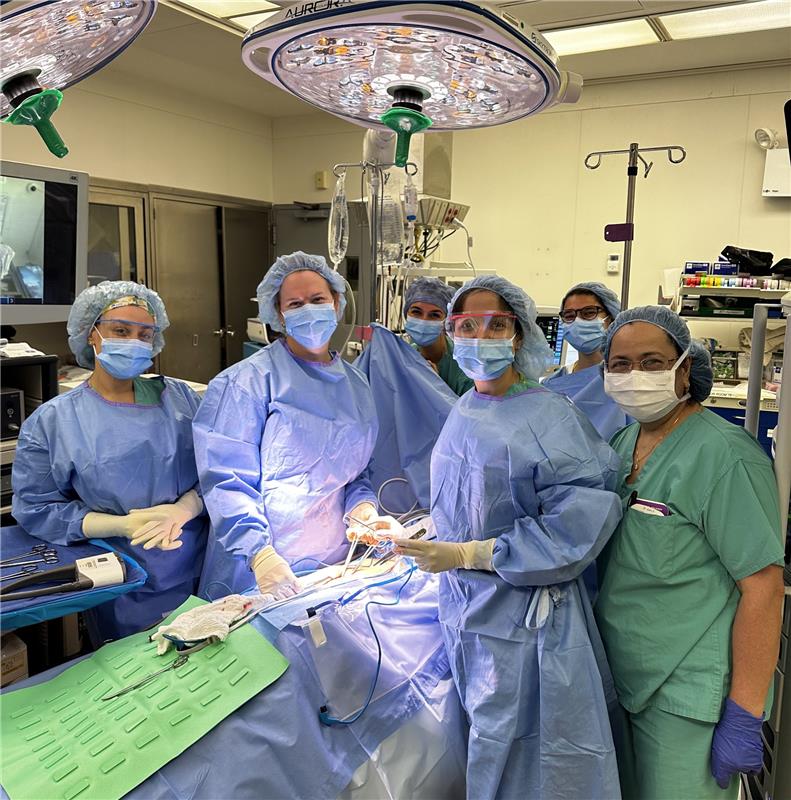
A kidney cancer diagnosis comes with a flood of decisions, and one of the biggest is choosing where to get treated. If you’re weighing Cleveland Clinic Florida against other options in South Florida, you’re already doing the right thing — researching your surgeon and surgical approach is one of the most important steps you can take. Kidney cancer is diagnosed in an estimated 80,450 Americans a year, and the good news is that outcomes have steadily improved: the overall 5-year relative survival rate now stands at 79.2%, and jumps to 93.3% for cancer caught while it’s still confined to the kidney.
Dr. Shirin Razdan is a board-certified urologic oncologist and robotic surgeon based in Miami, offering kidney cancer evaluation and treatment — including advanced Single Port robotic techniques — for patients across South Florida. This guide walks through the real numbers behind kidney cancer, your treatment options, and what to consider as you decide where to get care, whether that’s close to home in Miami or at a larger regional center.
Kidney Cancer: Quick Facts
| Statistic | What the Data Shows |
| New cases diagnosed annually (U.S.) | About 80,450, including roughly 50,770 in men and 29,680 in women |
| Lifetime risk | About 1 in 45 (2.2%) for men; lower for women |
| Sex distribution | About twice as common in men as in women |
| Typical age | Uncommon before age 45; most cases diagnosed in older adults |
| Diagnosed at localized stage | About 65.7% of cases, meaning the cancer hasn’t spread beyond the kidney |
| 5-year survival, localized stage | 93.3% |
| 5-year survival, all stages combined | 79.2% |
| Death rate trend | Falling for many years, even as new diagnoses have risen — largely attributed to earlier detection and better treatment |
Understanding Kidney Cancer
Kidney cancer often causes no symptoms early on, which is part of why routine imaging for unrelated issues frequently catches it before it causes problems. When symptoms do appear, they can include:
- Blood in the urine, which may come and go and range from pink to dark, rusty, or brown
- A dull ache or pain in the side, lower back, or between the ribs and hip
- A noticeable lump in the abdomen or side
- Unexplained weight loss — more than 10% of body weight over 6 months
- Persistent fatigue or low energy
- A fever that doesn’t go away, or heavy night sweats
- Changes in urination frequency or pattern
Risk Factors
- Smoking
- Obesity and high blood pressure
- Family history of kidney cancer
- Certain inherited conditions and long-term dialysis
- Occupational exposure to certain chemicals
How Kidney Cancer Is Diagnosed
- Urinalysis — checks for blood in the urine that isn’t visible to the eye
- Blood tests — evaluate kidney function and overall health, including markers like creatinine
- Imaging — CT scan, MRI, or ultrasound to visualize the kidney and identify a mass
- Biopsy — performed selectively, since tissue yield can be limited and there’s some risk of tumor seeding; often, imaging characteristics alone are enough to guide treatment planning
Treatment Options for Kidney Cancer
| Treatment | Best For | What to Know |
| Active surveillance | Small, slow-growing tumors, particularly in older patients or those with other health concerns | Regular imaging monitors the tumor; treatment begins only if it changes or grows |
| Robotic partial nephrectomy | Tumors that allow removal of just the cancerous portion | Preserves healthy kidney tissue and function; performed through small incisions using robotic instruments for precision |
| Radical nephrectomy | Larger or more centrally located tumors where the entire kidney must be removed | Removes the kidney, surrounding tissue, and sometimes nearby lymph nodes |
| Single Port robotic nephrectomy | Appropriately selected patients seeking a minimally invasive option with a single small incision | Fewer, smaller incisions than standard multi-port robotic or laparoscopic surgery, often with faster recovery |
| Ablation (radiofrequency or cryoablation) | Small tumors in patients who aren’t candidates for surgery | A needle delivers heat or extreme cold directly to the tumor without an incision |
| Targeted therapy and immunotherapy | Advanced or metastatic kidney cancer | Used when surgery alone isn’t curative; newer combinations have meaningfully improved outcomes for advanced disease in recent years |
Robotic nephrectomy has become the preferred surgical approach for most candidates because of its precision and minimally invasive nature — smaller incisions generally translate to less blood loss, less pain, and a faster return to normal activity compared with traditional open surgery.
Why Surgeon Experience Matters
Across cancer surgery broadly, research consistently links higher surgeon and hospital case volume with better outcomes — fewer complications, better cancer control, and better preservation of kidney function in partial nephrectomy cases. This is particularly relevant for robotic and Single Port kidney surgery, where the technique is more specialized and the learning curve is steeper than for standard open procedures. Our guide on why choosing a high-volume robotic kidney surgeon improves long-term cancer outcomes goes into more depth on what to look for and what questions to ask any surgeon you’re considering — whether in Miami or anywhere else.
Survival Rates by Stage
| Stage at Diagnosis | What It Means | 5-Year Relative Survival |
| Localized | Cancer confined entirely to the kidney | 93.3% |
| Regional | Spread to nearby lymph nodes or structures | Significantly lower than localized, though still treatable in many cases |
| Distant | Spread to other organs | Lowest of the three, though newer immunotherapy and targeted treatments have improved outcomes for many patients |
| All stages combined | — | 79.2% |
These figures are population averages, not predictions for any individual — your specific outlook depends on tumor size, type, overall health, and how quickly treatment begins. This is exactly why timely evaluation matters as much as which specific center you choose.
Choosing Where to Get Treated: What to Actually Compare
Large academic centers like Cleveland Clinic offer real strengths — multidisciplinary teams, research programs, and national recognition. At the same time, many South Florida patients value having a dedicated, board-certified urologic oncologist close to home for consultation, surgery, and follow-up care, without the added travel that a larger regional or out-of-state campus can require. When comparing options, it’s worth asking any surgeon or center directly about:
- How many robotic or Single Port kidney cancer surgeries the surgeon personally performs each year
- Whether a nerve- and kidney-tissue-preserving approach (partial nephrectomy) is an option for your specific tumor
- What the expected recovery timeline looks like for your specific procedure
- How follow-up care and monitoring will be coordinated, especially if you live locally
It’s also worth knowing that seeking a second opinion is considered good practice, not a slight to any provider — major centers, including Cleveland Clinic itself, actively encourage patients to get one. If you’d like that second set of eyes from a Miami-based specialist with direct robotic and Single Port surgical experience, Dr. Shirin Razdan offers consultations for exactly this kind of decision.
What to Expect After Surgery
- Short-term: Pain, temporary bleeding risk, and normal surgical recovery; minimally invasive and robotic approaches generally mean shorter hospital stays and faster return to light activity
- Long-term: Monitoring of kidney function is important, particularly after radical nephrectomy; partial nephrectomy is specifically chosen when possible to reduce the risk of long-term kidney function decline
- Follow-up imaging: Regular scans are scheduled to monitor for recurrence, with frequency depending on the original tumor’s stage and characteristics
Frequently Asked Questions
What are the survival rates for kidney cancer?
Overall, the 5-year relative survival rate across all stages is 79.2%. For cancer caught while still confined to the kidney (the stage for about two-thirds of diagnoses), survival rises to 93.3%.
Is robotic surgery better than open surgery for kidney cancer?
For appropriately selected patients, robotic surgery generally offers smaller incisions, less blood loss, less pain, and a faster recovery compared to traditional open surgery, while achieving comparable cancer control in experienced hands. Not every tumor is a good fit for a robotic or Single Port approach, which is why an individualized evaluation matters.
What’s the difference between partial and radical nephrectomy?
A partial nephrectomy removes only the cancerous portion of the kidney, preserving as much healthy kidney tissue and function as possible. A radical nephrectomy removes the entire kidney and is typically reserved for larger or more centrally located tumors where a partial approach isn’t feasible.
How common is kidney cancer?
It’s one of the 10 most common cancers in the U.S., with an estimated 80,450 new cases diagnosed annually. It’s about twice as common in men and is uncommon in people under 45.
Should I get a second opinion before kidney cancer surgery?
Yes — it’s widely considered good practice for any cancer diagnosis, and reputable centers, including large academic institutions, actively encourage it. A second opinion can confirm your diagnosis, clarify your options, and give you more confidence in your treatment plan, regardless of which provider you ultimately choose.
Can kidney cancer be treated without removing the whole kidney?
Often, yes. When the tumor’s size and location allow it, a partial nephrectomy removes just the cancerous tissue, preserving kidney function. Ablation is another kidney-sparing option for select small tumors in patients who aren’t surgical candidates.
What questions should I ask a kidney cancer surgeon?
Ask how many robotic or Single Port kidney surgeries they perform annually, whether a kidney-preserving approach is possible for your tumor, what recovery will realistically look like, and how follow-up monitoring will be handled going forward.
Does kidney cancer always require surgery?
Not always. Small, slow-growing tumors — particularly in older patients or those with significant other health concerns — may be appropriate for active surveillance, where imaging monitors the tumor over time rather than treating it immediately.
For a broader look at symptoms, survival data, and what treatment typically costs, see our complete guide to kidney cancer symptoms, survival rates, and treatment cost.