
305-468-3314

3650 NW 82nd Avenue, Suite 502, Miami, FL 33166


Kidney Cancer: Symptoms, Survival Rates & Treatment Cost
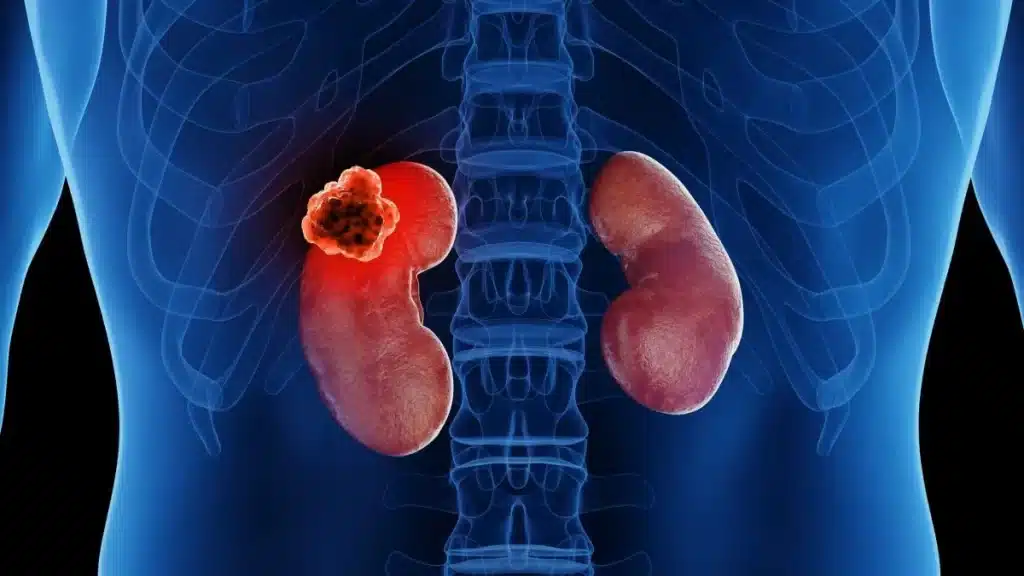
Kidney cancer is one of the cancers that is increasing rapidly among individuals. Among the different kidney cancer types, Renal Cell Carcinoma (RCC) is common and found in around 90% of cases of Kidney cancer.
Kidney cancer is a type of cancer, also known as renal cancer, that originates in the kidneys, forming a tumor. Kidneys are the two bean-shaped organs in the body responsible for filtering the blood and eliminating waste through urine. When the cells in these kidneys, either in one or both, grow uncontrollably, then there is a formation of mass or tumor, which is kidney cancer. If it is not detected early, it can spread and affect the nearby tissues or other body parts. This type of cancer is diagnosed more in men than in women and is found in people who are aged 60 or older.
What are the symptoms of kidney cancer?
If kidney cancer is not detected in its early stages, then it can cause damage to the nearby areas and other parts of the body. Kidney cancer usually goes undetected in the early stages, as it may not show noticeable symptoms. When the tumor grows or spreads into nearby tissues, the symptoms may appear, including:
- Hematuria (blood in the urine)
The most common sign of kidney cancer is hematuria (blood in the urine), which may appear red, cola-colored, or pink. Blood in urine may indicate other conditions, such as kidney stones or infections in the urinary tract, but if even a small amount of blood is seen, do not ignore it; seek medical evaluation. The urine test can detect this blood.
- Lower back Pain
Continuous pain on one side of the lower back can indicate that there is a tumor in or around the kidney. Pain in the side of the body that may be sharp or dull can also be a sign of kidney cancer. The discomfort in the body can be caused by a growing tumor or swelling in the kidney.
- Undesired Weight Loss
Unexplained weight loss can also be a symptom of cancer that can be accompanied by tiredness and loss of appetite.
- Lump in the Abdomen
There can be a lump or swelling on the side of the body or in the lower back. This lump or mass can be detected through physical tests or imaging studies. The presence of a lump or mass can be an indicator of kidney cancer.
- Night Sweats
Sweating in the body at night and fever can be signs of kidney cancer that can be caused by the body’s response to the tumor secreted by cancer cells.
- Fatigue and Anemia
A person may feel unusually tired and weak, which can be a sign of kidney cancer. Tiredness, also resulting from anemia, can be a common sign of kidney cancer. Tumors in the kidney can lead to anemia and result in paleness, dizziness, or fatigue.
- Hypertension (High blood pressure)
Kidneys are the organs in the body that play an important role in regulating blood pressure. Kidney tumors can disturb the function of the kidney, which can cause hypertension and is a noticeable symptom of cancer.
- Swelling
The swelling can be seen in the lower limbs and ankles, which can be caused by impaired kidney function due to kidney cancer.
Symptoms, such as bone pain, cough, breathing issues, and dizziness, may occur if the cancer has spread to other parts of the body. If these signs are seen, seeking medical attention is important.
What are the survival rates of Kidney cancer?
Survival rates can help to have an idea of how many people (in %age) with kidney cancer are still alive after the detection of their cancer. The survival rates give you a hint and a better understanding of the potential success of your treatment for kidney cancer. Survival rates vary based on the stage at diagnosis, age, overall health, and how well the cancer responds to treatment.
The American Cancer Society uses data from the Surveillance, Epidemiology, and SEER databases to provide survival figures for various types of cancer. The National Cancer Institute (NCI) keeps this data up to date. The five-year survival rate is the best way to gauge prognosis, which indicates the percentage of people alive after cancer detection.
The approximate five-year survival rates based on different stages, as per data from the American Cancer Society, are:
- Localized (stage I–II): There is no sign that the cancer has spread outside the kidney. (93%)
- Regional(Stage III): cancer has spread outside the kidney and reaches nearby structures and lymph nodes. (71%)
- Distant(Stage IV): These include cancers spread to different body parts, including the lungs, brain, or bones. (14%)
Treatment Options Available for Kidney Cancer:
Treatment Options for Kidney Cancer include surgery, cryoablation, radiofrequency ablation, radiation therapy, targeted therapy, immunotherapy, chemotherapy, and palliative care. Kidney cancer treatment generally starts with a surgical procedure in which the affected kidney is removed. When the cancer has spread beyond the kidney, then it is not possible to perform surgery. Then, the other treatment options are recommended.
What is the cost of Kidney Cancer treatment?
Different factors, such as the type of treatment, the healthcare facility, and whether the patient has insurance, can affect or vary the cost of kidney cancer treatment. Here is a brief of the cost of treatment for kidney cancer:
Surgical Treatment:
Kidney removal surgery can cost a range from $15,000 to $75,000 or more for patients who don’t have insurance, depending upon the complications and surgery complexity. For patients with insurance, out-of-pocket expenses can range from 10% to 50% of the procedure cost.
Radiation Therapy:
Radiation therapy costs can vary with the type of treatment and the number of sessions.
Immunotherapy:
The costs of immunotherapy in the U.S. can be considerable. One course of treatment with sorafenib can cost around $62,200. With medication, it costs about $79,400 per course.
Out-of-Pocket Expenses:
Patients may face significant out-of-pocket costs, including copays for doctor visits, lab tests, and prescription medications, even with insurance. Some individuals spend over 20% of their annual income on medical care related to cancer treatment.
Final Thoughts
Kidney cancer, when detected early, is often curable with surgical procedures and offers high survival rates. However, other treatments are recommended if not detected early, and advanced stages require complex treatments. The other recommended treatment surgeries are expensive and require regular checkups and symptom awareness for possible outcomes.
Today, with advancements in medical science, patients have better treatment options. If you or your loved ones are at risk, consulting a healthcare provider is a must, as well as exploring screening options for the treatment.
Frequently Asked Questions for Kidney Cancer:
Question. How does chemotherapy treat kidney cancer?
Answer. If kidney cancer is detected early, then the surgical procedure can be done. But if detected late, other treatments, including chemotherapy, may be used. Chemotherapy treats cancer with strong medicines, and most of them are given through a vein. Chemotherapy can help treat kidney cancer and is used in certain cases of cancer.
Question. What are the diagnostic tools that help to detect kidney cancer?
Answer. Early detection of kidney cancer can lead to an increased chance of survival and successful treatments. Here are some diagnostic tools that can help detect and confirm kidney cancer:
- Urinalysis
- Blood tests
- Imaging tests
- Biopsy
Question. What are the risk factors that can lead to kidney cancer?
Answer. Kidney cancer is a primary cancer that can affect other areas of the body, along with the kidneys. Some risk factors can increase the development of cancer in the kidneys and lead to serious issues. Here are the risk factors that contribute to kidney cancer, including:
- Smoking is a major risk factor that can increase the risk.
- Obesity can increase hormonal levels that can lead to the growth of cancer.
- High Blood Pressure can also be a factor that can increase cancer growth.
- Genetics can contribute to kidney cancer, including germline variants in VHL, MET, FH, TSC1/2, FLCN, SDHA/B/C/D, BAP1, and MITF genes.