
305-468-3314

3650 NW 82nd Avenue, Suite 502, Miami, FL 33166



Kidney cancer, also known as renal cancer, is one of the most common types of cancer. The most prevalent form of kidney cancer in adults is renal cell carcinoma, while Wilms’ tumor is a common type of kidney cancer found in children. The kidneys are vital organs that filter waste from the blood and produce hormones that regulate blood pressure and stimulate red blood cell production. The uncontrolled growth of cells in the kidneys can lead to the formation of tumors, which disrupt normal kidney function. These tumors can grow locally and potentially spread to other organs or systems.
What is the Diagnosis of Kidney Cancer?
For the diagnosis and stage of the cancer, some techniques are available, including:
- Imaging techniques such as ultrasound, CT scan, and MRI are used to locate the tumour and gauge its size to see if the cancer has spread.
- A biopsy can be performed in some cases to determine the presence of cancer.
- Blood and urine tests are performed to assess kidney function and overall health status.
- Additional tests are performed to check the lymph nodes and possible metastasis through imaging of the lungs and bones.
What are the Treatment Options for Kidney Cancer?
Here are some treatment options for kidney cancer, including:
| Treatment Options | How it works | Best for | When it is not ideal |
| Surgery | A surgical procedure performed for the removal of the tumor. Two main types of surgery are performed, including partial nephrectomy, where only the tumor is removed by preserving the healthy tissues. Whereas radical nephrectomy involves the removal of the whole kidney. | Considered best for the localized disease and is a minimally invasive option that can reduce recovery time. | For large tumours, or surgery risks due to patient comorbidities, location of tumour, etc. Radical nephrectomy has a greater risk of impacting kidney function. |
| Ablation | Uses heat or cold applied via needle or probe to destroy tumour tissue. Minimally invasive. | Good for small tumours (often <2‑3 cm), or patients who can’t tolerate major surgery. Less recovery time. | Maybe not suitable for deeper lesions or larger tumours; risk of incomplete ablation; sometimes imaging follow‑ups needed. |
| Radiation therapy | Focused high‑dose radiation to the tumour, sparing the surrounding tissue. For patients who are not surgical candidates or when the tumour is in a place where surgery is risky. | Useful non‑invasive option; with new technologies, side effects are reduced. | Radiation is less traditional for RCC (since many kidney cancers are not very radiosensitive), risk to surrounding organs, and sometimes requires multiple sessions. May not remove the tumour physically. |
| Systemic therapy | Medicines that work throughout the body: immune checkpoint inhibitors, tyrosine kinase inhibitors, anti‑angiogenesis drugs, and possibly other novel treatments. | Important for advanced (metastatic) disease; helps shrink or control disease; can be combined with surgery. | Side effects: may not offer a cure, but control; the patient’s health status matters. Monitoring and follow‑up are needed. |
| Active surveillance | For small tumours, slow growth, patients desiring to avoid surgery, or those with other health issues. Monitoring with imaging and intervening if the tumour grows. | Avoids surgery or intervention risks, preserves quality of life when the tumour is likely to be slow‑growing. | Requires frequent follow‑up; risk of tumour may grow or spread over time; psychological burden. |
What is the Survival Rate of Kidney Cancer?
The 5-year survival rate for kidney cancer significantly depends on the stage at which it is diagnosed. If the cancer is localized within the kidney, the survival rate is generally high. However, if the cancer has metastasized, meaning it has spread to other organs, the survival rate is usually lower.
Preserving kidney function is crucial. Losing significant kidney tissue can lead to chronic kidney disease. Therefore, partial nephrectomy or kidney-sparing treatments are preferred to maintain kidney functionality.
What Patients Should Consider for Treatment?
It is essential to consider a few key points or ask pertinent questions when evaluating treatment options. The following questions are provided for patients to discuss with their care team.
- How big is the tumor, has it spread to other organs, and how aggressive is it?
- Ask about the existing kidney health and functioning, if one kidney is compromised.
- Overall health, such as the heart, lungs, and other organs.
- Availability of the treatment options.
- Management of side effects and follow-up imaging.
- Speed of recovery and possibility of risks.
Experienced Robotic Urologic Surgeon for Treatment of Kidney Cancer: Dr. Shirin Razdan
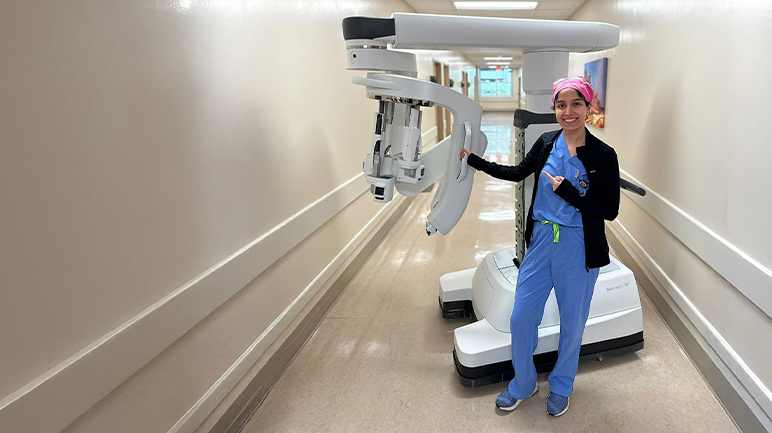
Dr. Shirin Razdan, based in Miami, Florida, is an experienced robotic urologic surgeon who has a strong specialization in renal cell carcinoma and minimally invasive and robotic kidney cancer surgery. Her experience and expertise can help patients in Hawaii.
- Fellowship‑trained in urologic oncology and robotic surgery.
- Experienced in kidney cancer diagnosis and surgical removal (nephrectomy, partial and radical), including robotic‑assisted techniques.
- Skilled in minimally invasive surgery, including robotic approaches, which have advantages in recovery, precision, and kidney preservation.
What is the expertise of Dr. Razdan?
- Dr. Shirin Razdan has surgical excellence, and with her extensive experience, she can perform partial nephrectomy safely and preserve more kidney tissue with reduced post-operative morbidity.
- She can help her patients understand whether surgery, ablation, radiation, or systemic therapy is best for their specific tumor type.
- Her expertise allows her to have fewer complications, better functional outcomes by preserving kidney function, and faster recovery, particularly when using robotic/minimally invasive techniques.
Summary
Kidney cancer treatment in Hawaii shares many similarities with approaches used across North America. The focus will be on early detection, accurate staging of the cancer, and selecting appropriate surgical or non-surgical treatment options. Additionally, maintaining kidney function and enhancing the patient’s quality of life are key priorities.
A specialist like Dr. Shirin Razdan exemplifies the level of expertise that patients might seek. She has a strong background in renal cell carcinoma, robotic and minimally invasive surgical training, as well as research experience. Patients throughout Hawaii can access similar expertise, whether in their local communities through referrals or remotely for a second opinion.
Frequently Asked Questions About Kidney Cancer Treatment Hawaii
Question 1. What factors influence the treatment options for kidney cancer?
Answer. For the treatment of kidney cancer, different options are available. The treatment depends on various factors, including the stage of cancer, the patient’s overall health, kidney function, patient preferences, and available resources.
Question 2. What are the symptoms of kidney cancer?
Answer. At the early stages, kidney cancer does not cause serious symptoms. As the tumor grows, symptoms may include blood in the urine, a lump or mass in the flank, persistent pain on one side, fatigue, weakness, weight loss, high blood pressure, and recurrent fevers.
Question 3. What are the risk factors for kidney cancer?
Answer. Risk factors that can contribute to the origin of kidney cancer include age, smoking, high blood pressure, obesity, and long-term kidney disease.
Question 4. What are the Steps for Patients in Hawaii Considering Treatment?
Answer. Steps for patients to consider in Hawaii:
- Early detection is important. If you are experiencing any symptoms, you need to seek medical attention quickly.
- Imaging tests and a possible biopsy can be beneficial to detect kidney cancer.
- You can ask for the available surgical options, like kidney-sparing surgery, if the tumor is localized.
- Minimally invasive surgery can be an ideal option for fewer complications and faster recovery.
- Ask for non-surgical treatments.

Medically Reviewed By
Dr. Shirin Razdan
Dr. Shirin Razdan is the director of the robotic surgery department at the Comprehensive Urological Surgery Institute in Miami, Florida. She is one of the leading and world renowned robotic surgeons in the United States who completed her medical education from Icahn School of Medicine at Mount Sinai Hospital, New York and has undergone subspecialty training in Urologic Oncology and Robotic Surgery.