
305-468-3314

3650 NW 82nd Avenue, Suite 502, Miami, FL 33166



Kidney cancer, also known as renal cancer, is among the 10 most common cancers in the U.S., with an estimated 80,450 new cases diagnosed nationally each year. Renal cell carcinoma is the most prevalent form in adults; Wilms’ tumor is the form most often found in children. The outlook is genuinely encouraging for most patients: roughly two-thirds of cases are caught while the cancer is still confined to the kidney, where the 5-year relative survival rate reaches 93.3%.
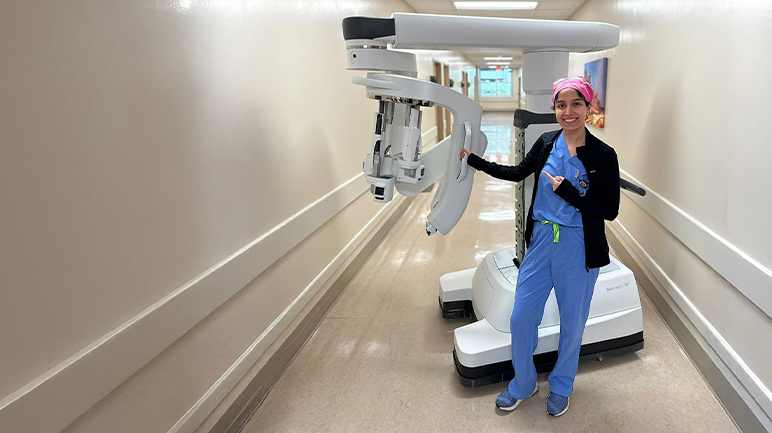
Specialized urologic oncology and robotic surgery expertise can be harder to access locally in Hawaii than on the mainland. Dr. Shirin Razdan, a board-certified, fellowship-trained urologic oncologist and robotic surgeon based in Miami, treats patients who travel from Hawaii for advanced kidney cancer care, including Single Port robotic surgery — a technique still concentrated among a relatively small number of surgeons nationally.
Things You Should Know About Kidney Cancer
| Statistic | What the Data Shows |
| New U.S. cases annually | About 80,450, among the 10 most common cancers nationwide |
| Diagnosed at localized stage | About 65.7% of cases |
| 5-year survival, localized stage | 93.3% |
| 5-year survival, all stages combined | 79.2% |
| Sex distribution | About twice as common in men as in women |
| Most common type | Renal cell carcinoma (RCC) in adults; Wilms’ tumor in children |
How Kidney Cancer Is Diagnosed
- Imaging: Ultrasound, CT scan, or MRI to locate the tumor and assess its size and whether it has spread
- Biopsy: Performed selectively to confirm the diagnosis
- Blood and urine tests: To assess kidney function and overall health
- Additional imaging: Of the lymph nodes, lungs, and bones to check for possible spread
For a deeper look at this process, see our guide to understanding kidney cancer from diagnosis to surgical treatment options.
Treatment Options for Kidney Cancer
| Treatment | How It Works | Best For | When It’s Not Ideal |
| Surgery (robotic nephrectomy) | Partial nephrectomy removes only the tumor, preserving healthy tissue; radical nephrectomy removes the whole kidney | Localized disease; minimally invasive approaches can reduce recovery time | Large tumors, or when patient health factors raise surgical risk; radical nephrectomy carries a greater risk to kidney function |
| Ablation | Heat or cold applied via needle or probe destroys tumor tissue | Small tumors (often under 2–3 cm) or patients who can’t tolerate major surgery | Deeper or larger lesions; risk of incomplete treatment, requiring imaging follow-up |
| Radiation therapy | Focused high-dose radiation targets the tumor while sparing surrounding tissue | Patients who aren’t surgical candidates, or tumors in risky locations for surgery | Kidney cancer is less radiosensitive than many other cancers; often doesn’t remove the tumor itself |
| Systemic therapy | Immune checkpoint inhibitors, targeted drugs, and anti-angiogenesis medication acting throughout the body | Advanced or metastatic disease, sometimes combined with surgery | Typically controls rather than cures the disease; requires ongoing monitoring for side effects |
| Active surveillance | Regular imaging monitors a small, slow-growing tumor | Patients wanting to avoid surgery, or those with other significant health concerns | Requires frequent follow-up; some risk the tumor grows or spreads over time |
For more on how these options are weighed against each other, see our complete guide to kidney cancer treatment options.
Why Preserving Kidney Function Matters
Losing significant kidney tissue can raise the long-term risk of chronic kidney disease, which is why partial nephrectomy and other kidney-sparing treatments are prioritized whenever a tumor allows for it. This is also where surgical experience makes a measurable difference — more experienced surgeons are generally able to perform partial nephrectomy safely while preserving more functional kidney tissue, with fewer complications.
What Patients Should Discuss With Their Care Team
- How large is the tumor, has it spread, and how aggressive does it appear?
- What is the current health and function of both kidneys?
- How is overall health — heart, lungs, and other organs — factoring into treatment options?
- Which treatment options are actually available, and how do they compare for this specific tumor?
- How will side effects and follow-up imaging be managed?
- What does realistic recovery time look like, and what are the risks?
Dr. Shirin Razdan: Robotic Kidney Cancer Surgery
- Fellowship-trained in urologic oncology and robotic surgery
- Extensive experience in kidney cancer diagnosis and surgical treatment, including partial and radical nephrectomy, with a focus on robotic and Single Port techniques
- A track record of preserving more functional kidney tissue during partial nephrectomy, with reduced post-operative complications
- Direct involvement in helping patients understand whether surgery, ablation, radiation, or systemic therapy best fits their specific tumor type and overall health
Robotic and minimally invasive techniques generally offer real advantages: fewer complications, better preservation of kidney function, and faster recovery compared to traditional open surgery, when performed by an experienced surgeon.
Kidney Cancer Care for Hawaii Patients
Kidney cancer treatment approaches in Hawaii share the same core principles used across the mainland: early detection, accurate staging, and selecting the surgical or non-surgical option that fits each patient’s specific tumor and health. Where access to highly subspecialized robotic or Single Port surgical expertise is more limited locally, patients throughout Hawaii can access that level of care either through local referral partnerships or by traveling for a consultation and procedure — and many patients start with a remote review of imaging and records before committing to travel.
Frequently Asked Questions
What factors influence treatment options for kidney cancer?
Treatment depends on the stage of the cancer, the patient’s overall health and kidney function, personal preferences, and which treatment options are realistically available.
What are the symptoms of kidney cancer?
Early kidney cancer often causes no symptoms. As a tumor grows, symptoms can include blood in the urine, a lump or mass in the flank, persistent pain on one side, fatigue, weakness, weight loss, high blood pressure, and recurrent fevers.
What are the risk factors for kidney cancer?
Risk factors include advancing age, smoking, high blood pressure, obesity, and long-term kidney disease.
What is the survival rate for kidney cancer?
The 5-year relative survival rate is 93.3% for cancer still confined to the kidney at diagnosis, and 79.2% across all stages combined. Learn more in our complete guide to kidney cancer symptoms, survival rates, and treatment cost.
What steps should Hawaii patients take if they’re considering treatment?
Seek medical attention promptly if you notice symptoms, complete imaging (and biopsy, if recommended) to confirm the diagnosis, and ask specifically about kidney-sparing surgical options and minimally invasive approaches, which generally mean fewer complications and faster recovery.
Do I need to travel to Miami for a first consultation?
Not necessarily — many out-of-state and island patients begin with a remote review of imaging and records to determine whether traveling for Single Port or robotic surgery makes sense for their specific case.
Is surgery always necessary for kidney cancer?
No. Small, slow-growing tumors may be appropriate for active surveillance or ablation instead of surgery, particularly in patients who prefer to avoid major surgery or have other significant health concerns.
Should I get a second opinion before deciding on treatment?
Yes — a second opinion is considered good medical practice for any cancer diagnosis and can help confirm your diagnosis and clarify your options, regardless of which provider you ultimately choose.
To learn more about Dr. Razdan’s background and surgical approach, visit her about page, or read more on whether kidney cancer is curable for your specific stage.