
305-468-3314

3650 NW 82nd Avenue, Suite 502, Miami, FL 33166


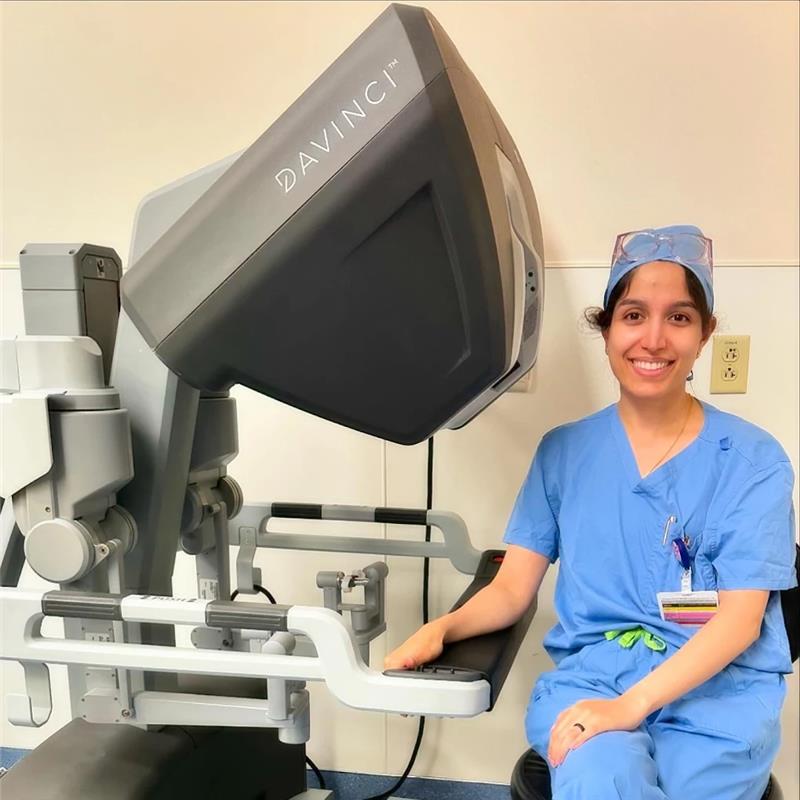
Here’s something most New Hampshire residents haven’t heard: kidney cancer diagnoses in our state have been climbing about 1.2% a year, while the national rate has stayed roughly flat. That’s no reason to panic. Kidney cancer found early is highly treatable, and about 93% of people whose cancer hasn’t left the kidney are alive five years later. It is a good reason to take any scan result or symptom seriously.
Dr. Shirin Razdan is a robotic urologic oncologist in Miami. New Hampshire patients travel to her for kidney-sparing surgery and then return home for follow-up with their local team. This page explains what’s happening in New Hampshire, how treatment decisions get made, and how the logistics work.
Kidney cancer in New Hampshire: three facts worth knowing
- It’s rising. New Hampshire’s kidney cancer rate grew 1.2% per year from 2015 to 2019, while the U.S. rate stayed essentially unchanged (0.1%).
- It’s common nationally. About 80,450 Americans will be diagnosed in 2026, and roughly 1 in 45 men will develop kidney cancer in their lifetime.
- Most cases are one type. About 90% are renal cell carcinoma, the same share the state found among New Hampshire cases.
Live in or near Merrimack? What the state found
From 2009 to 2018, Merrimack had 66 kidney cancer diagnoses where about 46 were expected for a town of its age profile, roughly 42% higher. No other cancer type was significantly elevated. Neighboring towns, including Nashua, Manchester, Bedford and Londonderry, were not.
What this does and doesn’t mean: the New Hampshire Department of Health and Human Services has said it cannot connect the excess to any specific cause, and the cause may remain unclear. Smoking, obesity, high blood pressure, family history, kidney disease and some workplace chemicals are all known kidney cancer risks. If you’re worried, the practical steps are the same wherever you live:
- Tell your primary care doctor about your concern and any family history.
- Don’t ignore blood in your urine or persistent side pain.
- Ask whether imaging makes sense for you, especially if you have other risk factors.
When kidney cancer gives you a warning
Often it doesn’t. Many tumors are found by chance on a scan for something unrelated. When symptoms do appear, the most common are blood in the urine, lasting pain in your side or back, a lump, unexplained weight loss, or fatigue that won’t lift.
How treatment is matched to your tumor
There’s no single “kidney cancer treatment”. Your plan depends on the tumor’s size, location and type, and on your overall health.
- Small tumor: the goal is usually to remove the tumor and keep the healthy kidney. Some very small tumors can be safely monitored instead of operated on right away.
- Larger or complex tumor: surgery is still the main treatment, and the question becomes whether the kidney can be saved. Read how robotic surgery helps preserve kidney function.
- Cancer that has spread: medicines such as targeted therapy and immunotherapy come in, usually led by a medical oncologist alongside surgery or radiation when it helps.
For a side-by-side look, see our guide to kidney cancer treatment options.
Why robotic surgery
Dr. Razdan performs robotic nephrectomy, both partial (keeping the kidney) and radical (removing it). Compared with open surgery, the robotic approach generally means smaller incisions, less pain and blood loss, a shorter hospital stay and a quicker return to normal life. [Add: Dr. Razdan’s typical hospital stay and kidney-sparing rate.]
Recovery varies by procedure. Here’s what the recovery timeline looks like.
How care works from New Hampshire
- Send your records. Scans, pathology and notes come first. [Add: upload or mail instructions.]
- Consult. You leave with a clear recommendation.
- Travel for surgery. Boston Logan (BOS) and Manchester (MHT) are the usual starting points. Check current routes, since service changes. Our guide to traveling to Miami for surgery covers lodging and packing.
- Follow-up at home. Your New Hampshire doctors can handle routine scans and bloodwork, and any medical oncology you need, with results shared back to our team.
Why New Hampshire patients choose Dr. Razdan
- robotic kidney surgeries performed [real number]
- [Board certification, fellowship, training]
- A focus on keeping as much healthy kidney as possible
- One surgeon who explains your options in plain language
Book a consultation: 305-468-3314 | 3650 NW 82nd Avenue, Suite 502, Miami, FL 33166
FAQs: Kidney cancer in New Hampshire
Is kidney cancer really increasing in New Hampshire?
Yes. State data show about a 1.2% yearly rise from 2015 to 2019, while the national rate stayed flat. Part of the increase may come from more tumors being found incidentally on scans.
Should I worry if I live in Merrimack or a PFAS-affected town?
The state found more cases than expected in Merrimack but can’t tie them to a cause, and nearby towns weren’t elevated. Don’t ignore symptoms, and ask your doctor about your own risk factors.
Is it worth traveling from New Hampshire to Miami for surgery?
For complex tumors, or when you want to keep as much kidney as possible, a surgeon who does many of these operations can make a real difference. A consultation helps you decide, and you can get a second opinion before committing.
Can my scans and follow-up stay in New Hampshire?
Usually, yes. Routine imaging and labs can be done close to home, and we coordinate with your local doctors.
How fast do I need to act after a diagnosis?
Don’t wait, but you also have time to get a second opinion. Many kidney cancers grow slowly, so a short delay to choose the right surgeon is generally reasonable. Your doctor can tell you what’s safe for your case.
Does a kidney mass always mean cancer?
No. Some masses are benign, but imaging alone can’t always tell, so a specialist reviews your scans and sometimes recommends a biopsy.
How will I know whether I can keep my kidney?
Surgeons look at tumor size and location, your other kidney’s function and your overall health. When the anatomy allows, partial removal is preferred.
What should I bring to my first consultation?
Bring your CT or MRI images (not just the report), pathology results if you’ve had a biopsy, a medication list, and notes on any family history of kidney cancer.