
305-468-3314

3650 NW 82nd Avenue, Suite 502, Miami, FL 33166


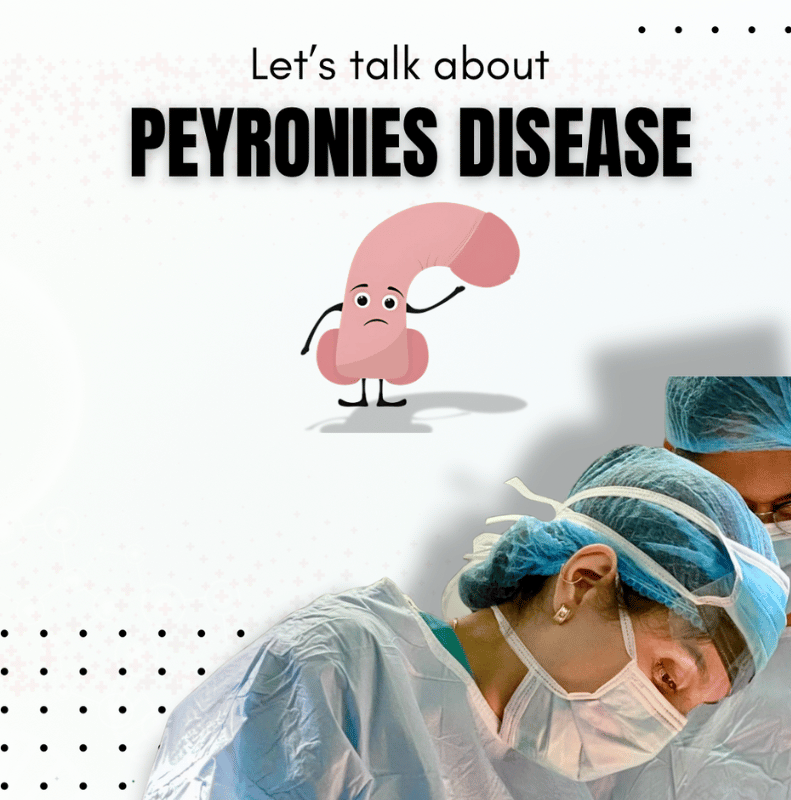
Peyronie’s disease is a progressive inflammatory condition resulting in fibrous plaque formation within the penis, which can lead to penile curvature, shortening, and pain. The incidence of Peyronie’s disease is estimated to be 22.4 to 25.6 cases per 100,000 men. This is why it’s important to work with a Peyronie’s Disease Specialist.
What is Peyronie’s disease?
The condition most commonly presents in men 50 to 59 years old, with an average age of presentation of 55 years. While the exact cause of Peyronie’s disease is still under investigation, most research suggests that trauma to the penis, both micro and macroscopic, results in aberrant wound healing and calcified plaque formation in the fibrous sheath that envelops the corpora of the penis, known as the tunica albuginea.
Other suggested risk factors include smoking history, prior radical prostatectomy, low testosterone levels, as well as other medical conditions such as Dupuytren’s disease. Erectile dysfunction is also commonly seen with Peyronie’s.
Diagnosis of Peyronie’s disease?
Diagnosis of Peyronie’s disease is typically by a physical exam with measurement of the angle of curvature with a full erection. Management options are dependent on the stage of the disease as the size of the plaque and degree of curvature can evolve over time.
During the active phase of the disease, patients typically endorse pain with erections as the Peyronie’s plaque has not fully formed. This stage can take up to a year. In the stable phase of the disease, the angle of curvature has reached its maximum point due to no further plaque deposition and pain has ceased.
Peyronie’s Treatment Offered by Dr. Shirin Razdan
Treatment during the active phase is typically pain control. Treatment during the active phase is typically pain control with anti-inflammatory agents like ibuprofen. During the stable phase of disease, one option of treatment is injection of an enzyme that breaks down calcified tissue directly into the Peyronie’s plaque known as Xiaflex.
Surgical options, which are preferred for larger degrees of curvature and concomitant ED, include penile plication and plaque excision and grafting. Penile plication involves strategically placing sutures in the tunic albuginea of the penis that are opposite that of the direction of curvature. This is preferred for smaller degrees of curvature due to the risk of penile shortening with larger curvatures. Plaque excision or incision and grafting involves excision of the plaque and placing a biologic graft to overlay or fill the defect.
If the patient has concomitant ED, then a penile prosthesis can be placed at the same time. In this example, we have a patient with a 30-degree dorsal penile curvature. The penile skin and underlying layers of Dartos were dissected off the corpora, Buck’s fascia was incised, and the neurovascular bundle was carefully mobilized until visualization of the plaque.
An artificial erection allowed for better localizing of the plaque. The plaque was subsequently excised sharply and an Everest patch with amniotic membrane graft was used to repair the defect. With a total operative time of one and a half hours, the curvature was completely reduced and our patient was able to have normal, pain-free erections after surgery.
Why is Dr. Shirin Razdan a Peyronie’s Disease Specialist in Miami?
Dr. Shirin Razdan is a well-known urologist and Peyronie’s Treatment Specialist based in Miami. She is one of the only Urologist in Miami who has completed a mini-fellowship in Mens Health and Erectile Dysfunction in New York City. She and her team offer a personalized and compassionate approach to men suffering from Penile Curvature issues, and she has extensive experience in medical and surgical procedures in urology. Here, we mentioned some key aspects of why she is a leading Peyronie’s treatment specialist in Miami:
Why Choose Dr. Razdan for Peyronie’s Treatment?
- Vast Experience and Expertise in mens health issues.
- Complete treatment & care approach.
- Minimally invasive procedures
- Personal and respectful care.
- Advanced technologies, etc.
FAQs about Peyronie’s Treatment Specialist in Miami
Question 1. Which steps should we take if I suspect I have Peyronie’s disease?
Answer: If you are facing continued difficulty with penile curvature, it is necessary to see a specialist like Dr. Shirin Razdan. A complete assessment will help decide the root cause and the best treatment options.
Question 2. Can lifestyle changes help with Peyronie’s disease?
Answer: Once you have Peyronie’s disease, you can limit the disease progress by non-surgical intervention. However, once the plaque has matured, the best treatment option is surgery in the hands of an expert like Dr. Shirin Razdan.
Question 3. What is the best treatment available for Peyronie’s disease in Miami?
Answer: Peyronie’s plaque excision and grafting in expert hands has been proven to give the best long term results.

Medically Reviewed By
Dr. Shirin Razdan
Dr. Shirin Razdan is the director of the robotic surgery department at the Comprehensive Urological Surgery Institute in Miami, Florida. She is one of the leading and world renowned robotic surgeons in the United States who completed her medical education from Icahn School of Medicine at Mount Sinai Hospital, New York and has undergone subspecialty training in Urologic Oncology and Robotic Surgery.