



Stages 1-4 Kidney Cancer Survival Rates: A Full Breakdown: A range of factors influences the kidney cancer survival rate, each playing an individual and collective role in determining outcomes for kidney cancer patients. When it comes to kidney cancer, having accurate information about the stage of the disease is crucial in making treatment decisions and determining survival rates. If you are a patient, a caregiver, or simply interested in learning more, understanding kidney cancer survival rates can provide valuable insights.
In this article, Dr. Shirin Razdan, one of the leading oncologists and kidney cancer specialists in Miami, will break down kidney cancer survival rates from stages 1-4 to help you with all the information you need to make the right treatment for kidney cancer.
Understanding the Factors that Affect Kidney Cancer Survival Rates
Multiple factors influence kidney cancer survival rates, each contributing to survival outcomes.
Stage of Kidney Cancer
- One of the primary determinants of survival for kidney cancer is the stage at which the cancer is diagnosed.
- Early-stage kidney cancer (Stage 1 and 2) is typically associated with higher survival rates of more than 90%.
- In contrast, advanced-stage Kidney Cancer (Stage 3 and 4), where the cancer may have spread to other parts of the body, presents greater challenges in terms of treatment and prognosis.
Therefore, understanding the stage of kidney cancer at diagnosis is crucial for assessing potential outcomes.
Health and Age of the Patient
- Another significant factor in kidney cancer survival is the patient’s overall health and age.
- Younger patients are generally healthy and have fewer comorbidities. Thus, they often have better kidney cancer survival rates compared to older patients or those with underlying health issues.
- The overall health of a patient can affect their ability to tolerate treatments, recover from surgeries, and respond to therapies, thereby impacting their kidney cancer prognosis.
This highlights the importance of assessing not just the cancer itself but the individual’s complete health profile when evaluating survival chances.
Histological Type of Kidney Cancer
- The histological type of kidney cancer also affects survival rates. For instance, clear cell carcinoma, the most common type of kidney cancer, has a better 5-year survival rate and prognosis compared to other subtypes like papillary or chromophobe carcinoma.
- The tumor’s genetic makeup, including specific mutations and markers, can also provide insights into how aggressive the cancer is and how well it may respond to various treatments.
Understanding all of these factors can empower patients and families to make informed decisions regarding their care.
Kidney Cancer Survival Rates by Stage
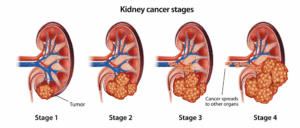
Kidney cancer is categorized into distinct stages, each with its unique survival rate.
Stage 1 Kidney Cancer Survival Rate:
In Stage 1 Kidney Cancer, where the cancer is confined to the kidney and is relatively small, up to 7 cm, the five-year survival rate is up to 90%. This means that 70 to 90 out of 100 people diagnosed with stage 1 kidney cancer will survive up to 5 years.
This high rate reflects the effectiveness of the available treatment options, including surgery, which is often the primary approach for localized tumors. Surgical intervention at this stage can lead to excellent outcomes, and many patients may remain cancer-free for extended periods following treatment.
Stage 2 Kidney Cancer Survival Rate:
In Stage 2 Kidney Cancer, where it is still localized but larger than 7 cm, the five-year survival rate is up to 80% (50-80%). This means that 50 to 80 out of 100 people diagnosed with stage 2 kidney cancer will survive up to 5 years.
Treatment options at this stage still primarily involve surgical removal of the tumor via Partial nephrectomy(removal of only the cancerous part) or Radical Nephrectomy (removal of the entire tumour-affected kidney), and many patients can be cured. However, the larger size of kidney cancer may require more advanced surgical procedures with robotic-assisted surgery, which can improve overall outcomes.
Stage 3 Kidney Cancer Survival Rate:
In Stage 3 Kidney Cancer, where the cancer may have spread to nearby lymph nodes, the five-year survival rate is up to 70% (20-70%). This means that 20 to 70 out of 100 people diagnosed with stage 3 kidney cancer will survive up to 5 years.
At this stage, treatment may involve a combination of radical nephrectomy surgery, targeted therapies, and immunotherapy. The complexity of kidney cancer treatment options and the potential for recurrence necessitate a comprehensive approach by an experienced oncologist.
Stage 4 Kidney Cancer Survival Rate:
In Stage 4 Kidney Cancer, where the cancer has metastasised or spread to distant organs like the liver, lungs, bones, and brain, the survival rate significantly declines. The five-year survival rate is up to 20% (0-20%). This means that up to 20 out of 100 people diagnosed with stage 4 kidney cancer will survive up to 5 years.
This stage typically requires aggressive treatment strategies, including systemic therapies, and underscores the critical importance of early detection and intervention.
Get Treated By the Best Oncologist in Miami | Dr. Shirin Razdan
Dr. Shirin Razdan is an experienced professional dealing with patients having kidney cancer. The landscape of kidney cancer treatment is continuously evolving, with advancements in targeted therapies, immunotherapies, and surgical techniques offering hope for improved prognoses.

According to Dr. Razdan, lifestyle changes and supportive care also play essential roles in improving survival rates and quality of life for patients. Engaging in healthy behaviours, seeking emotional support, and using available resources can empower individuals on their cancer journey. Contact Dr. Shirin Razdan, our top oncologist in Miami, for questions about kidney cancer.
Frequently Asked Questions
Question 1. How long can you live with stage 4 metastatic kidney cancer?
Answer. This means for a person with stage 4 or distant kidney cancer that has spread to the lungs, their chance of surviving for 5 years after their diagnosis is around 18% compared to those without the disease.
Question 2. Can Renal Cell Carcinoma be completely cured?
Answer. Current treatment cures more than 50% of patients with stage I renal cell cancer, but patients with stage IV disease have poor outcomes.
Question 3. Are all kidney cancers aggressive?
Answer. Some are aggressive. Others are called indolent, which means they grow slowly. Clear cell tumors can leave the kidney and spread to other parts of the body.
Question 4. At what size should the kidney mass be removed?
Answer. Small, locally restricted renal cell carcinoma, less than 4 cm in size, should ideally be removed operatively by nephron-sparing tumour enucleation.
Related posts:
 Dr. Shirin Razdan Featured on SurvivorNet – Breaking Down Prostate Cancer Facts, Myths, and Treatment Options
 Kidney Cancer Symptoms in Females vs. Males: What’s Different?
 Kidney Carcinoma Explained: Diagnosis, Staging, and Survival Rates
 Kidney Cancer in Younger Patients: What’s Different About Treatment Decisions