




What Is Laparoscopic Surgery — And Why Dr. Shirin Razdan Uses It When It Truly Helps: Most patients don’t come into a urology visit asking for laparoscopic surgery.
They come in because something showed up on imaging. A tumor. A blockage. Pain that doesn’t make sense anymore.
And almost always, the concern is the same: How big is the surgery going to be?
That’s where laparoscopic surgery comes into the conversation.
Laparoscopic surgery isn’t a “lighter” version of surgery. It’s still real surgery. What’s different is how the surgeon gets access to the problem — and how much disruption that causes along the way.
At Shirin Razdan’s practice, laparoscopic and robotic techniques are used often, but never automatically. The approach is chosen because it makes sense for the anatomy, the diagnosis, and the long-term outcome — not because it sounds modern.
What Laparoscopic Surgery Actually Means (In Real Terms)
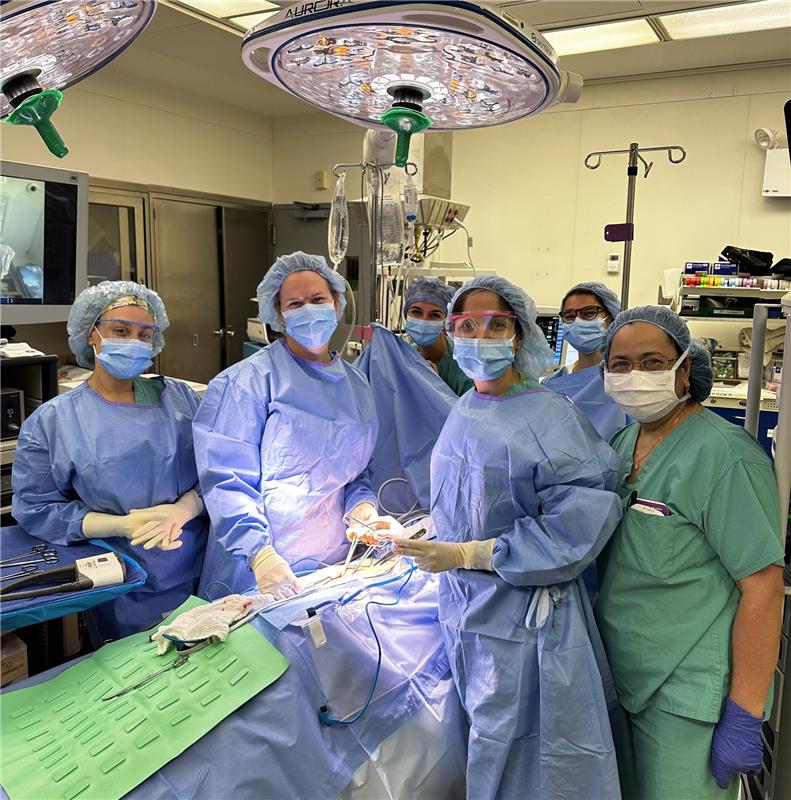
Instead of one large incision, laparoscopic surgery uses several small ones. Through those openings, a camera and instruments are placed. The camera magnifies everything on a screen, often far more clearly than what’s visible in open surgery.
For patients, this usually translates into less trauma to muscle, less post-operative pain, and a recovery that feels more manageable. But the important thing to understand is that the goal of the surgery doesn’t change.
Cancer still has to be removed properly.
Kidney tissue still has to be protected.
Margins still matter.
The access is smaller — the standards are not.
Why Laparoscopic Surgery Is Especially Important in Urology
Urologic surgery is different from many other types of surgery. It’s not just about removing tissue. It’s about preserving function.
- Kidney function.
- Urinary control.
- Blood supply.
- Nerve pathways.
This is where laparoscopic and robotic surgery become especially useful in experienced hands. The magnified view allows for careful dissection and more precise decision-making in real time.
Dr. Razdan is known for being selective about this. Some cases benefit tremendously from minimally invasive access. Others don’t. Knowing the difference is what separates experience from enthusiasm.
What Patients Usually Notice After Laparoscopic Surgery
Patients don’t usually describe recovery in medical terms. They talk about practical things.
How sore they feel when they get out of bed.
How quickly they can walk without guarding their abdomen.
How soon they can return to normal routines without feeling “set back.”
With laparoscopic surgery, many patients notice:
- Smaller scars
- Less abdominal tightness
- Earlier movement
- Shorter hospital stays
That doesn’t mean recovery is instant. It still takes time. But it’s often less overwhelming than traditional open surgery.
When Laparoscopic Surgery Is Not the Right Choice
This matters just as much.
- Not every patient is a candidate.
- Not every tumor should be approached this way.
- Not every prior surgical history allows it safely.
Large tumors, difficult locations, extensive scar tissue — these factors change the equation. Dr. Razdan does not force minimally invasive surgery when it increases risk or compromises outcome. In those cases, a different approach is discussed honestly.
That’s often what patients appreciate most: knowing the recommendation is based on their case, not a default technique.
Why Surgeon Judgment Matters More Than the Approach
Patients sometimes assume laparoscopic surgery is safer simply because it’s less invasive. That’s not entirely true.
Safety comes from:
- Planning
- Experience
- Intraoperative judgment
- Knowing when to adjust strategy
The robot or camera doesn’t make those decisions. The surgeon does.
This is why patients travel to see Dr. Razdan — not just for advanced techniques, but for the ability to choose the right technique in the first place.
Frequently Asked Questions
Is laparoscopic surgery always better than open surgery?
No. It’s better in the right situation, and worse in the wrong one.
Does laparoscopic surgery treat cancer just as effectively?
Yes — when performed appropriately. Cancer control is based on execution, not incision size.
Is robotic surgery different from laparoscopic surgery?
Robotic surgery is a form of laparoscopic surgery that allows greater precision and control.
Will recovery be painless?
No surgery is painless, but many patients find laparoscopic recovery more manageable.
How do I know if I’m a candidate?
That’s determined after reviewing imaging, anatomy, and medical history during consultation.
Why Patients Choose Dr. Shirin Razdan
Patients don’t choose Dr. Razdan because she offers laparoscopic surgery.
They choose her because she knows when to use it — and when not to.
Her approach is careful, anatomy-driven, and outcome-focused. The priority is never the technique itself. It’s what gives the patient the safest path forward with the best long-term function.
Contact Dr. Shirin Razdan
If you’ve been told you may need urologic surgery and want to understand whether laparoscopic or robotic surgery is appropriate for you, a consultation is the next step.
📍 Miami Robotic Surgery — Dr. Shirin Razdan
🌐 Website: https://miamiroboticsurgery.com
📞 Phone: 305-468-3314
The right surgery isn’t the smallest one.
It’s the one chosen for the right reason.
Related posts:
 Dr. Shirin Razdan Featured on SurvivorNet – Breaking Down Prostate Cancer Facts, Myths, and Treatment Options
 Is Kidney Cancer Hereditary? Understanding Genetic Risk
 Kidney Cancer Symptoms in Females vs. Males: What’s Different?
 Partial vs. Radical Nephrectomy: How Surgeons Decide What You Actually Need