


The therapeutic landscape for metastatic renal cell carcinoma (mRCC) has experienced a major paradigm shift over the past two decades. Historically, when cytokine-based immunotherapies (interferon-alpha and interleukin-2) represented the standard of care, upfront cytoreductive nephrectomy (CN)—the surgical removal of the primary kidney tumor in the setting of known distant metastatic spread—was mandatory. Randomized trials from that era demonstrated a definitive overall survival advantage when surgical debulking preceded systemic treatment.
However, the advent of targeted therapies (VEGF receptor tyrosine kinase inhibitors) and modern immune checkpoint inhibitors (anti-PD-1, anti-CTLA-4 combination regimens) fundamentally altered this algorithm. Following the publication of landmark clinical trials like CARMENA and SURTIME, the reflexive, universal application of upfront surgery was challenged. Rather than operating on every patient immediately, modern urologic oncology demands precise risk stratification to determine which individuals derive a survival benefit from cytoreductive surgery and who should initiate upfront systemic immunotherapy instead.
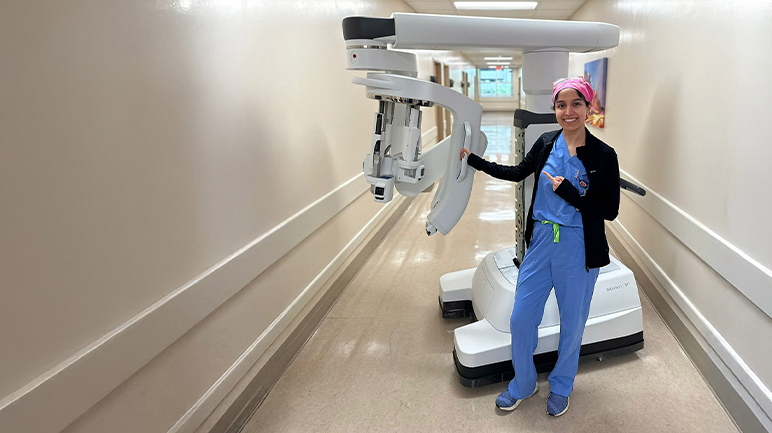
Practicing in Miami, Florida, Dr. Shirin Razdan, MD is a dual-fellowship trained, board-certified urologist specializing in advanced robotic urologic oncology and complex endourology. Having completed prestigious clinical fellowships in robotic oncology and advanced endourology at top academic medical centers, Dr. Razdan provides evidence-based multidisciplinary care for patients with high-risk, locally advanced, and metastatic renal malignancies. By evaluating tumor biology, anatomical complexity, performance status, and systemic risk criteria, Dr. Razdan helps patients determine if and when cytoreductive nephrectomy should be integrated into their comprehensive treatment strategy.
The Biological Rationale Behind Primary Tumor Debulking
Why remove the kidney when cancer has already seeded distant organs such as the lungs, bones, liver, or lymph nodes? The scientific rationale for cytoreductive nephrectomy rests on several oncologic principles:
- Eliminating the Primary “Seed” Source: The large primary renal tumor continues to shed circulating tumor cells, angiogenic growth factors (such as VEGF), and immunosuppressive cytokines into the systemic circulation. Excising the primary mass halts this persistent metastatic cascade.
- Reversing Tumor-Induced Immunosuppression: Massive renal tumors often exhaust the host immune response by producing high levels of inflammatory mediators. Removing this large reservoir of tumor burden can enhance the efficacy of modern immune checkpoint inhibitor combinations (such as nivolumab plus ipilimumab or pembrolizumab plus axitinib).
- Local Symptom Palliation and Complication Prevention: Primary kidney tumors frequently cause intractable flank pain, gross hematuria requiring blood transfusions, recurrent urinary tract infections, and paraneoplastic syndromes (such as severe hypercalcemia or erythrocytosis). Resecting the symptomatic organ provides durable local control and protects quality of life.
The Modern Evidence: CARMENA, SURTIME, and the IMDC Risk Model
The contemporary role of cytoreductive nephrectomy is defined by two key clinical milestones:
1. The CARMENA and SURTIME Trials
- The CARMENA Trial: Demonstrated that for unselected, intermediate- and poor-risk metastatic RCC patients, upfront targeted therapy alone (sunitinib) was non-inferior to upfront surgery followed by sunitinib. Performing immediate major surgery in patients with aggressive, rapidly progressive disease often caused surgical complications that delayed or completely prevented them from ever receiving life-prolonging systemic medications.
- The SURTIME Trial: Investigated the concept of deferred (or delayed) cytoreductive nephrectomy. Patients received systemic therapy first; those who demonstrated disease stability or shrinkage after several cycles were then taken to surgery. This established a biological “stress test”—patients with aggressive, non-responsive cancer were spared morbid surgery, while those showing disease stability gained maximal benefit from subsequent consolidation surgery.
2. IMDC (Heng) Risk Stratification Criteria
Patient selection today relies heavily on the International Metastatic Renal Cell Carcinoma Database Consortium (IMDC) risk model, which scores six clinical variables:
- Karnofsky Performance Status (KPS) $< 80\%$
- Time from initial diagnosis to systemic therapy <1 year
- Anemia (hemoglobin below normal reference range)
- Hypercalcemia (corrected serum calcium above upper limit of normal)
- Neutrophilia (absolute neutrophil count above upper limit of normal)
- Thrombocytosis (platelet count above upper limit of normal)
Patients are categorized as:
- Favorable Risk (0 risk factors): High survival probability; prime candidates for cytoreductive surgery.
- Intermediate Risk (1–2 risk factors): Select candidates benefit, especially if the vast majority of disease resides within the kidney.
- Poor Risk (3–6 risk factors): Upfront surgery is generally contraindicated; systemic immunotherapy is initiated immediately.

Who Still Benefits from Cytoreductive Nephrectomy?
Modern guidelines from the American Urological Association (AUA) and National Comprehensive Cancer Network (NCCN) delineate clear profiles of patients who derive meaningful benefit from surgery:
| Patient Clinical Profile | Recommended Treatment Sequence | Clinical Rationale |
| Oligometastatic Disease (Favorable Risk) | Upfront Cytoreductive Nephrectomy + Metastasectomy | Potential for complete surgical clearance (rendered disease-free) |
| Dominant Primary Burden ($> 75\%\text{–}80\%$ in Kidney) | Upfront or Deferred Robotic Nephrectomy | Debulks bulk of tumor volume; systemic therapy manages tiny lung nodules |
| Intractable Local Symptoms (Gross Bleeding, Severe Pain) | Palliative / Urgent Nephrectomy or Embolization | Resolves life-threatening hemorrhage and intractable pelvic pain |
| Disease Stability on Dual Immunotherapy | Deferred (Consolidative) Cytoreductive Nephrectomy | Removes residual resistant clones in kidney after distant metastases stabilize |
| Poor IMDC Risk / Rapidly Progressive Multiple Metastases | Upfront Systemic Immunotherapy Only | Surgery risks complications that delay vital systemic treatments |
The Robotic Advantage in Cytoreductive Surgery
When cytoreductive nephrectomy is indicated, minimizing surgical recovery time is critical so the patient can start or resume systemic immunotherapy without delay.
Dr. Shirin Razdan utilizes minimally invasive robotic-assisted nephrectomy whenever oncologically appropriate:
- Keyhole Access: Avoiding large, painful flank or subcostal muscle-cutting incisions substantially reduces postoperative wound complications and narcotic requirements.
- Rapid Convalescence: Most robotic patients ambulate within hours and are discharged within 24 to 48 hours, shortening the interval before systemic therapy can be safely initiated.
- Precise Hilar Dissection: High-definition 3D visualization and wristed robotic instruments enable controlled vascular stapling, even in the presence of bulky retroperitoneal adenopathy or renal vein thrombi.
Frequently Asked Questions (FAQ)
Does cytoreductive nephrectomy cure metastatic kidney cancer on its own?
No. Once renal cell carcinoma has spread to distant organs, surgery alone is rarely curative unless all metastatic sites can also be completely resected (such as a solitary, isolated lung or adrenal metastasis). In the vast majority of cases, cytoreductive nephrectomy serves as a critical component of a broader multimodal treatment plan combined with modern immunotherapy or targeted drugs.
What is a “deferred” cytoreductive nephrectomy?
A deferred cytoreductive nephrectomy occurs when a patient starts systemic immunotherapy or targeted therapy first. If follow-up scans after 3 to 6 months show that the distant metastases have shrunk or remained stable, the patient is taken to surgery to remove the primary kidney tumor. This strategy ensures surgery is performed only on patients whose biology responds favorably to treatment.
How soon after robotic surgery can systemic immunotherapy begin?
Because robotic-assisted surgery involves minimal tissue trauma and small keyhole incisions, the surgical recovery window is significantly shorter than open surgery. Most patients can safely start or resume systemic checkpoint inhibitors within three to four weeks post-surgery, once internal wound healing is confirmed and liver/renal profiles normalize.
Conclusion
Cytoreductive nephrectomy remains a valuable, life-prolonging tool for metastatic renal cell carcinoma, but the days of reflexive, unselected surgery have ended. Today, success depends entirely on personalized patient selection: identifying those with oligometastatic burdens, favorable IMDC risk biology, symptomatic primary masses, or proven stability on systemic immunotherapy. Through advanced robotic techniques and collaborative multidisciplinary oncology, Dr. Shirin Razdan ensures that patients receive the right treatment at the right time to optimize both survival and functional vitality.