


A diagnosis of Stage 4 kidney cancer—known clinically as metastatic renal cell carcinoma (mRCC)—means that malignant cells originating within the renal parenchyma have spread beyond Gerota’s fascia into distant organs, regional or retroperitoneal lymph nodes, or adjacent structures. Historically, a Stage 4 diagnosis carried limited therapeutic options and a grim prognosis. For decades, standard chemotherapy was largely ineffective against renal cell carcinoma, leaving cytokine-based regimens (interferon-alpha and high-dose interleukin-2) as the few systemic treatments available.
The therapeutic landscape has evolved dramatically. Today, the management of metastatic kidney cancer relies on a sophisticated multimodal strategy that combines modern immune checkpoint inhibitors, anti-angiogenic targeted therapies, and precision robotic surgery. Surgery remains a critical component of care, but its timing and indication are no longer reflexive or universal. Success depends on carefully selecting which patients will benefit from primary tumor debulking and when systemic medications must take priority.
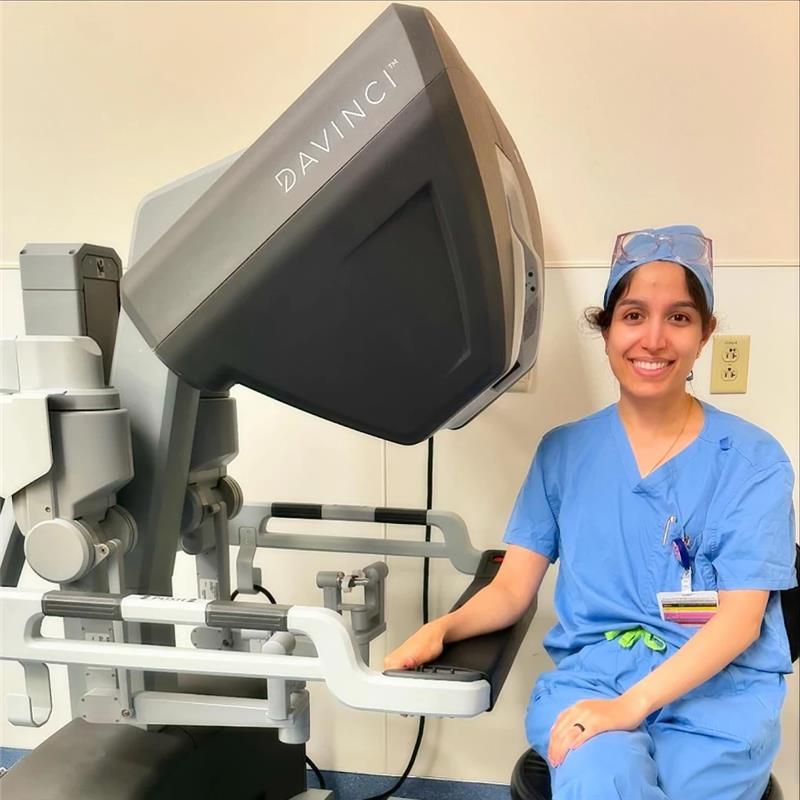
Practicing in Miami, Florida, Dr. Shirin Razdan, MD, is a fellowship-trained, board-certified urologist specializing in advanced robotic urologic oncology and minimally invasive renal surgery. Having completed intensive robotic surgical training and oncology fellowships at the Icahn School of Medicine at Mount Sinai in New York City, Dr. Razdan directs the robotic surgery department at the Comprehensive Urological Surgery Institute in Miami. Collaborating closely with medical oncologists, radiation oncologists, and pathologists, Dr. Razdan provides evidence-based surgical evaluations to determine if and when robotic nephrectomy plays a vital, life-prolonging role in Stage 4 kidney cancer.
Understanding the Systemic Backbone: Immunotherapy and Targeted Therapy
Unlike localized kidney cancer, where surgery alone is often curative, Stage 4 disease is a systemic condition requiring systemic therapy. Modern systemic treatments attack cancer cells throughout the body through two primary mechanisms:
1. Immune Checkpoint Inhibitors (Immunotherapy)
Kidney cancer cells often evade the immune system by expressing proteins (such as PD-L1) that turn off circulating cytotoxic T-cells. Modern immunotherapy utilizes monoclonal antibodies that block these inhibitory pathways (anti-PD-1 / anti-CTLA-4), empowering the patient’s own immune system to recognize, attack, and destroy tumor cells throughout the body:
- Dual Immunotherapy Combinations: Regimens like Nivolumab plus Ipilimumab activate different phases of T-cell response and produce durable, long-term complete responses in a subset of intermediate- and poor-risk clear cell mRCC patients.
2. Targeted Receptor Tyrosine Kinase Inhibitors (Anti-VEGF TKIs)
Clear cell renal cell carcinoma is characterized by alterations in the VHL gene pathway, leading to an overproduction of Vascular Endothelial Growth Factor (VEGF). This causes hypervascularization, feeding tumor growth. Targeted oral TKIs—including Cabozantinib, Lenvatinib, and Axitinib—choke off the blood supply feeding both the primary renal mass and metastatic deposits.
3. Immunotherapy-TKI Combinations
Combining a targeted anti-VEGF agent with a PD-1 inhibitor (e.g., Pembrolizumab plus Axitinib, Cabozantinib plus Nivolumab, or Lenvatinib plus Pembrolizumab) provides rapid tumor shrinkage alongside long-term immune-mediated disease control, serving as a frontline standard of care across all risk categories.
Where Surgery Fits: Defining the Role of Cytoreductive Nephrectomy
When kidney cancer has already spread to the lungs, bones, liver, or lymph nodes, what is the role of surgically removing the primary kidney tumor?
The surgical removal of the kidney in the presence of metastatic disease is called Cytoreductive Nephrectomy (CN). Historically, upfront surgery was performed on almost every patient before starting systemic therapy. However, landmark clinical trials (including the CARMENA and SURTIME studies) showed that performing major surgery on patients with aggressive, rapidly progressive disease can cause complications that delay or prevent them from receiving vital systemic therapy.
Today, the role of surgery in Stage 4 kidney cancer is stratified into three distinct scenarios:
1. Upfront Cytoreductive Nephrectomy (Oligometastatic / Low-Risk)
- Ideal Candidates: Patients with excellent physical performance status, favourable biological risk factors, and oligometastatic disease (a low volume of spread, such as one or two small, slow-growing lung nodules) where $> 80\%$ to $90\%$ of the total cancer burden resides within the primary kidney tumour.
- The Clinical Objective: Removing the large primary tumor debulks the dominant source of cancer cells, potential immunosuppressive factors, and angiogenic signals, leaving only a minor metastatic burden that can be treated with targeted ablation, stereotactic radiation (SBRT), or systemic medication.
2. Deferred (Consolidative) Cytoreductive Nephrectomy
- The Modern Standard for Intermediate Risk: For patients with moderate metastatic volume, current guidelines frequently favor initiating systemic immunotherapy or combination regimens first.
- The Rationale: If after 3 to 6 months of immunotherapy, follow-up scans show that the distant metastases have shrunk or stabilized, the patient has demonstrated favorable biological responsiveness. Dr. Razdan can then safely perform a robotic nephrectomy to resect the residual, drug-resistant primary tumor in the kidney, consolidating the treatment response.
3. Palliative Nephrectomy for Intractable Symptoms
- In select patients whose cancer causes life-threatening gross hematuria, severe renal pain from capsular distension, or refractory paraneoplastic syndromes, surgery or renal artery embolization is performed to alleviate acute symptoms and restore functional stability, even if metastatic disease remains widespread.
Comparative Overview: Treatment Sequence in Stage 4 Kidney Cancer
| Clinical Presentation | Primary Initial Therapy | Secondary / Integrated Therapy | Role of Robotic Surgery |
| Oligometastatic (Favorable Risk; 1–2 solitary sites) | Upfront Robotic Cytoreductive Nephrectomy | Systemic immunotherapy or targeted metastasectomy | Primary debulking to achieve near complete response |
| Moderate Metastatic Volume (Intermediate Risk) | Upfront Immunotherapy + TKI combination | Deferred Robotic Cytoreductive Nephrectomy | Consolidative surgery after distant response |
| High Burden / Rapid Progression (Poor Risk) | Aggressive Dual Immunotherapy Regimens | Continuous systemic disease management | Avoided; non-beneficial unless severe local bleeding |
| Severe Local Flank Pain or Severe Hematuria | Urgent Palliative Robotic Surgery or Embolization | Subsequent systemic medical therapy | Symptom relief and stabilization of blood counts |
The Robotic Advantage in Metastatic Renal Surgery
When surgery is indicated for Stage 4 kidney cancer, the procedure must involve minimal recovery time. If a patient undergoes an open operation with a large, painful flank incision and experiences wound complications, their initiation of life-prolonging immunotherapy can be delayed for months.
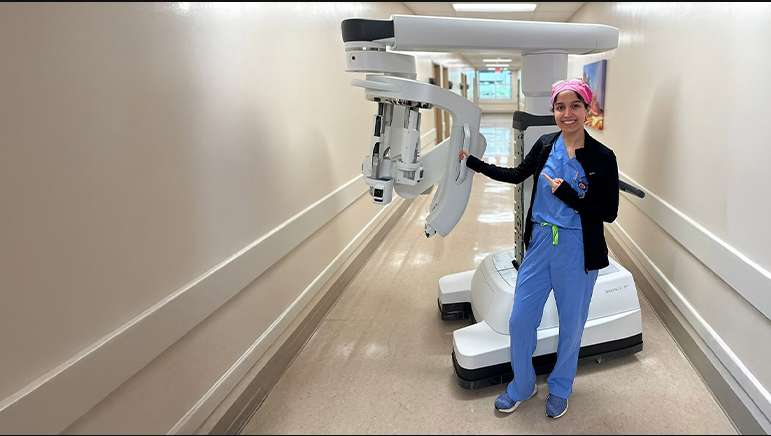
Dr. Shirin Razdan utilizes minimally invasive robotic and single-port platforms to perform cytoreductive nephrectomies:
- Keyhole Port Access: 3D high-definition magnification allows precise control of the renal vascular pedicle and retroperitoneal lymph nodes through tiny incisions.
- Preserving Functional Reserve: Controlled dissection limits blood loss and protects the surrounding bowel and spleen.
- Expedited Systemic Timeline: Most patients walk the same day, leave the hospital within 24 to 48 hours, and can safely begin systemic immunotherapy within three to four weeks post-surgery.
Frequently Asked Questions (FAQ)
Is surgery alone ever curative for Stage 4 kidney cancer?
Surgery alone is rarely curative once distant metastases are present. The exception is true oligometastatic disease—for instance, a patient with a primary renal tumor and a single, isolated metastasis in the lung or adrenal gland. In carefully selected cases, removing both the kidney and the isolated metastasis (metastasectomy) can render a patient completely disease-free.
What tests determine if I am a candidate for cytoreductive surgery?
Candidacy is evaluated using the IMDC (Heng) risk criteria, which evaluate six clinical markers: functional performance status, time from diagnosis to treatment, anemia, hypercalcemia, thrombocytosis, and neutrophilia. Patients also undergo multiphasic contrast CT scans of the chest, abdomen, and pelvis (or brain MRI and bone scans if symptomatic) to quantify total tumor volume and location.
What happens if surgery is not recommended for my cancer?
If upfront surgery is not advisable, systemic therapy (dual immunotherapy or immunotherapy-TKI combinations) is initiated immediately. Many patients experience significant disease shrinkage and stabilization on these regimens. After reassessing tumor burden on restaging scans, deferred surgery can be reconsidered if the primary tumor remains the predominant active disease site.
Conclusion
Stage 4 kidney cancer is a complex diagnosis, but it is no longer an untreatable one. The integration of advanced immunotherapy and targeted therapies has expanded survival expectations, while refined surgical protocols ensure that cytoreductive nephrectomy is deployed precisely when it provides a distinct oncologic advantage. Through specialized robotic platforms, multidisciplinary coordination, and personalized risk stratification, Dr. Shirin Razdan helps patients navigate advanced renal cancer with clear, evidence-based surgical strategies.