


Most patients don’t ask for “single-port surgery.”
They ask for something much simpler:
Can I recover faster?
Will this hurt less?
Will I get back to normal quickly?
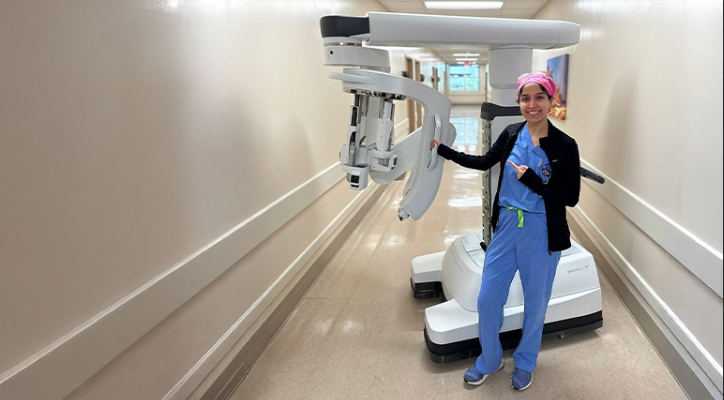
And that’s exactly where Dr. Shirin Razdan often introduces the idea of single-port surgery.
Because in many cases, it’s not about doing something more advanced.
It’s about doing the same surgery… in a way that’s easier on the body.
What Single-Port Surgery Actually Means
Traditional minimally invasive surgery usually involves multiple small incisions — often 3 to 5.
Single-port surgery changes that.
Instead of multiple entry points, everything is done through:
one small incision — typically hidden within the belly button
Through that single access point, Dr. Razdan can insert:
- a high-definition camera
- specialized surgical instruments
- tools needed to complete the procedure
From the outside, it looks simpler.
From a surgical standpoint, it’s more refined — and requires more precision.
Why Fewer Incisions Change Recovery
It sounds obvious, but it matters more than most patients expect.
Fewer incisions means:
- less overall trauma to the body
- fewer areas that need to heal
- lower risk of wound-related discomfort
- less irritation to surrounding tissue
At Miami Robotic Surgery, this often translates into a smoother early recovery phase.
Patients aren’t dealing with multiple sore areas.
They’re healing from a single, controlled entry point.
Less Pain — And Why Patients Notice It
Pain after surgery isn’t just about what was done internally.
It’s also about the incisions themselves.
Each incision:
- cuts through tissue
- irritates nerves
- contributes to soreness
With single-port surgery, there’s only one site to manage.
Patients often describe:
- less sharp or localized pain
- easier movement in the first few days
- less discomfort when standing or sitting
Dr. Razdan doesn’t present this as “pain-free.”
But it is typically more manageable compared to multi-incision approaches.
Faster Return to Daily Activities
One of the biggest advantages patients care about is time.
How quickly can I get back to normal?
With single-port surgery, many patients experience:
- earlier mobility
- quicker return to light activity
- less hesitation moving around
- faster transition back to routine tasks
That doesn’t mean skipping recovery.
But it does mean fewer physical barriers during that process.
The Cosmetic Benefit (That Patients Care About More Than They Admit)
Even patients who say they don’t care about scars… usually do.
Single-port surgery places the incision:
inside the belly button
Which means:
- it’s naturally hidden
- it blends with the body’s shape
- it’s difficult to see once healed
At Miami Robotic Surgery, this is often a secondary benefit — but still an important one.
Especially for patients who want minimal visible reminders of surgery.
Why This Approach Requires More Surgical Skill
This is the part patients don’t always see.
Single-port surgery is not just “fewer incisions.”
It’s technically more demanding.
Everything is done through one entry point, which means:
- instruments are closer together
- movement is more restricted
- precision becomes even more important
That’s why experience matters.
Dr. Shirin Razdan uses this approach selectively — when it’s appropriate and safe — based on:
- the condition being treated
- patient anatomy
- surgical complexity
Not every case is a candidate.
And that decision is part of what defines good surgical care.
Where Single-Port Surgery Is Most Commonly Used
Dr. Razdan applies single-port techniques in certain urologic and kidney procedures where:
- access can be achieved safely through one site
- visualization remains clear
- outcomes are not compromised
The goal is always the same:
achieve the same surgical result — with less impact on the patient
What Recovery Actually Feels Like
Patients often expect recovery to be difficult.
But with single-port surgery, many describe:
- manageable soreness rather than severe pain
- quicker ability to move comfortably
- less disruption to sleep and daily habits
- confidence returning earlier
The biggest difference isn’t just physical.
It’s psychological.
Patients feel like they’re recovering — not struggling.
Why Patients Seek Out Dr. Shirin Razdan for This Approach
There are many surgeons who perform minimally invasive procedures.
Patients who choose Dr. Shirin Razdan are often looking for:
- experience in robotic and advanced surgical techniques
- a focus on reducing recovery burden
- careful patient selection for optimal outcomes
- clear communication about what’s realistic
At Miami Robotic Surgery, the goal isn’t just to perform surgery.
It’s to make the entire experience — especially recovery — as manageable as possible.
When Single-Port Surgery May Not Be the Best Option
This is an important part of the conversation.
Not every patient is a candidate.
Factors that may influence the decision include:
- prior abdominal surgeries
- complex anatomy
- size or location of the condition being treated
- safety considerations
Dr. Razdan evaluates this carefully.
Because the priority is always:
doing the safest and most effective procedure — not just the least invasive one
Frequently Asked Questions
Is single-port surgery better than traditional laparoscopy?
It can offer advantages in recovery and scarring, but it depends on the case and patient.
Is recovery really faster?
Many patients experience a smoother early recovery, though full healing timelines are similar.
Will I have a visible scar?
The incision is typically hidden within the belly button, making it difficult to notice after healing.
Is it safe?
Yes — when performed by an experienced surgeon and in appropriate cases.
Can everyone have single-port surgery?
No. Suitability depends on the condition and individual anatomy.
Contact Dr. Shirin Razdan
If you’re exploring surgical options and want to understand whether single-port surgery could offer a faster, smoother recovery, a consultation is the best next step.
Dr. Shirin Razdan
Website: https://miamiroboticsurgery.com
During your visit, your condition will be evaluated in detail, and you’ll get a clear explanation of whether a single-port approach is appropriate — along with what your recovery would realistically look like.