



Upper Tract Urothelial Carcinoma (UTUC)—malignancy arising from the transitional epithelial lining of the renal pelvicalyceal system and the ureter—represents an uncommon and challenging malignancy in urologic oncology, accounting for only 5% to 10% of all urothelial cancers. Unlike bladder urothelial tumors, which can be visualized and resected through the urethra with relative ease, tumors of the upper urinary tract inhabit a delicate, thin-walled system deep within the retroperitoneum.
Because the muscularis layer of the ureter and renal pelvis is exceedingly thin, UTUC tumors tend to invade neighboring structures earlier than bladder tumors. Historically, the standard response was radical nephroureterectomy (RNU) with bladder cuff excision. While oncologically sound, complete removal of a kidney and ureter can trigger new-onset chronic kidney disease (CKD), elevate cardiovascular morbidity, and limit eligibility for future systemic cisplatin-based chemotherapies.
Today, modern management emphasizes risk stratification: distinguishing patients who require radical surgical extirpation from those who are candidates for kidney-sparing, organ-preserving strategies.
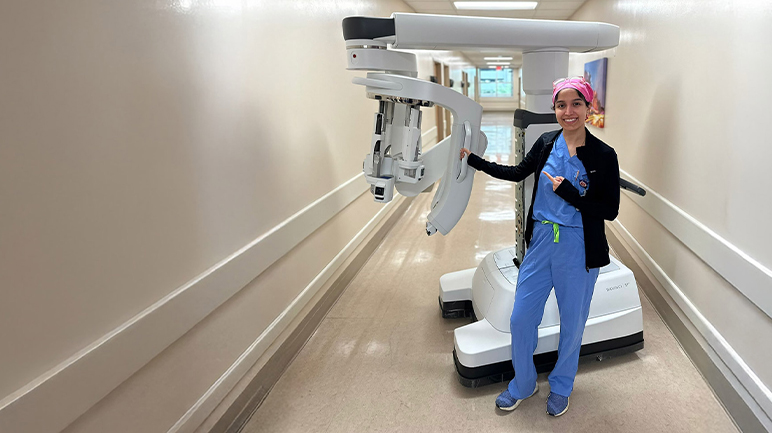
Practicing at Miami Robotic Surgery within the Comprehensive Urologic Surgery Institute in South Florida (miamiroboticsurgery.com), Dr. Shirin Razdan is a fellowship-trained urologic oncologist and robotic surgeon who completed advanced training at the Icahn School of Medicine at Mount Sinai in New York. Dr. Razdan combines advanced endourologic diagnostics with robotic extirpative techniques to provide patients with an individualized approach that balances cancer control with the preservation of renal function.
The Diagnostic Pathway: Staging and Risk Stratification
Navigating UTUC begins with an accurate assessment of tumor grade, multifocality, and architectural stage. Because transurethral biopsies in the upper tract can be prone to tissue under-sampling, a multi-modal diagnostic protocol is required:
[HEMATURIA / SUSPICIOUS IMAGING]
│
├─► 1. Multiphasic CT Urography (CTU) ──► Triple-phase mapping for filling defects & parenchymal invasion
│
├─► 2. Digital Flexible Ureterorenoscopy ─► Direct visualization of tumor morphology & caliber
│
├─► 3. Endoscopic Biopsy & Selective Cytology ──► Histopathologic grading via micro-forceps or baskets
│
└─► 4. Bladder Cystoscopy ──────────────► Exclude concomitant lower-tract urothelial tumors (~17% overlap)
The Clinical Decision Matrix: Low-Risk vs. High-Risk UTUC
The European Association of Urology (EAU) and National Comprehensive Cancer Network (NCCN) guidelines divide UTUC into two distinct risk categories:
- Low-Risk UTUC:
- Unifocal disease
- Tumor size $< 2\text{ cm}$
- Low-grade cytology and biopsy
- No evidence of invasive architecture on CT urography
- Clinical Goal:Kidney-sparing management to preserve global nephron function.
- High-Risk UTUC:
- Multifocal lesions
- Tumor size $> 2\text{ cm}$
- High-grade cytology or histopathology
- Hydronephrosis, regional lymphadenopathy, or invasive features on cross-sectional imaging
- Clinical Goal:Radical Nephroureterectomy (RNU) with formal lymph node dissection.
Kidney-Sparing Protocols for Low-Risk Disease
For patients with low-risk tumors, solitary functioning kidneys, bilateral disease, or baseline renal insufficiency, endoscopic organ-sparing treatments can provide cancer control while avoiding dialysis:
┌──► 1. Endoscopic Laser Ablation (RIRS)
│ ──► High-precision Holmium:YAG or Thulium fiber laser ablation via flexible scope
│
[ORGAN-PRESERVATION STRATEGIES] ──┼──► 2. Chemoablation with Reverse-Thermal Hydrogel (Jelmyto®)
│ ──► Sustained-release intrarenal mitomycin instillation
│
└──► 3. Segmental Ureterectomy with Re-Implantation
──► Complete surgical resection of distal ureter while preserving the kidney
- Endoscopic Laser Ablation: Using flexible digital ureteroscopes, Dr. Razdan navigates into the calyces or ureter to photocoagulate and ablate papillary low-grade lesions using low-pulse-energy lasers, sparing underlying normal mucosa.
- Reverse-Thermal Hydrogel Instillation (Jelmyto®): Because liquid topical chemotherapy drains away quickly through the ureter, reverse-thermal gel remains liquid at cold temperatures and solidifies into a gel at body temperature. Instilled via catheter into the renal pelvis, it dissolves over 4 to 6 hours, delivering prolonged mitomycin exposure directly to tumor cells.
- Segmental Ureteral Resection: For focal, solitary tumors located in the distal ureter, the diseased ureteral segment and bladder cuff can be excised robotically, re-implanting the remaining healthy proximal ureter into the bladder (ureteroneocystostomy) while leaving the native kidney intact.
The Gold Standard for High-Risk UTUC: Robotic Radical Nephroureterectomy (RNU)
For high-grade, large, or invasive tumors, the definitive oncologic cure remains Radical Nephroureterectomy with Bladder Cuff Excision and Regional Lymphadenectomy.
[Upper Phase: Robotic Kidney Mobilization] ──► Athermal dissection of kidney & upper ureter en bloc
│
▼
[Retroperitoneal Template Lymphadenectomy] ──► Extended regional lymph node dissection
│
▼
[Lower Phase: True Bladder Cuff Excision] ──► Full-thickness excision of ureteral orifice + water-tight closure
The Imperative of the Complete Bladder Cuff
A common technical failure in historical open surgery was “incomplete ureterectomy”—leaving a short stump of the distal ureter attached to the bladder. The urothelium of that retained stump develops recurrent cancer in 30% to 58% of patients.
Dr. Razdan executes a true, full-thickness bladder cuff excision:
- The ureter is tracked all the way down into the pelvis without clamping or cutting it short.
- A formal 1 to 2 cm cuff of the bladder wall surrounding the ureteral orifice is excised en bloc with the intact kidney and ureter, preventing tumor seeding.
- The resulting bladder defect is repaired in two watertight layers using articulated robotic micro-suturing.
Template-Based Lymph Node Dissection
High-risk UTUC has a high propensity for lymphatic spread. Dr. Razdan performs an anatomical, template-based retroperitoneal lymphadenectomy:
- Right-Sided Tumors: Dissection of paracaval, precaval, retrocaval, and interaortocaval nodes.
- Left-Sided Tumors: Dissection of para-aortic, preaortic, and retroaortic nodes.
Treatment Pathways: Kidney-Sparing vs. Robotic Radical Surgery
| Parameter | Endoscopic / Organ-Sparing (Low-Risk) | Robotic Radical Nephroureterectomy (High-Risk) |
| Primary Indication | Low-grade, small ($<2\text{ cm}$), unifocal lesions | High-grade, multifocal, large ($>2\text{ cm}$), or invasive |
| Organ Preservation | 100% of native kidney & ureter spared | Entire kidney, ureter, and bladder cuff excised |
| Surgical Invasiveness | Incisionless (transurethral) or focal segmental | 3 to 4 keyhole ports or Single Port (SP) platform |
| Hospital Stay | Outpatient (same-day discharge) | 1 to 2 days (often 24 hours) |
| Systemic Chemotherapy | Retains eGFR; preserves future chemo eligibility | Reduced eGFR may restrict cisplatin eligibility post-op |
| Surveillance Schedule | Rigid 3-month ureteroscopy & cytology cycles | Alternating cystoscopy, CT urography, and cytology |
Postoperative Protocols: Mitigating Bladder Recurrences
A major clinical hurdle in UTUC is that up to 40% of patients develop a subsequent bladder recurrence within two years of surgery, driven by intraluminal tumor cells shedding downward into the bladder basin.
To combat this, Dr. Razdan implements evidence-based preventive protocols:
- Single Postoperative Instillation of Intravesical Chemotherapy: Within 24 to 72 hours of robotic RNU, a single prophylactic dose of intravesical chemotherapy (such as gemcitabine or mitomycin C) is instilled into the bladder to destroy circulating shed cancer cells, reducing subsequent bladder cancer recurrence by nearly 50%.
- Structured Surveillance Schedule: Long-term surveillance requires rigorous cystoscopic inspection of the bladder, urinary cytology, and cross-sectional cross-sectional imaging at 3- to 6-month intervals.
Conclusion
Upper Tract Urothelial Carcinoma requires a balanced, individualized treatment plan. A high-risk lesion demands radical robotic surgery with complete bladder cuff excision and lymphadenectomy, whereas low-risk disease can often be successfully managed with organ-sparing endoscopic protocols. Dr. Shirin Razdan provides comprehensive oncologic assessment, guiding patients toward the strategy that maximizes cancer clearance while preserving vital kidney function.
- Surgeon: Dr. Shirin Razdan, MD
- Specialty: Fellowship-Trained Robotic Urologic Surgeon & Urologic Oncologist
- Practice: Miami Robotic Surgery / Comprehensive Urologic Surgery Institute
- Office Location: 3650 NW 82nd Avenue, Suite 502, Doral/Miami, FL 33166
- Official Website: miamiroboticsurgery.com
- Direct Consultations: (305) 468-3314