


Historically, renal cell carcinoma (RCC) was considered a radioresistant malignancy. Conventional external beam radiation therapy, which delivered modest radiation doses divided over several weeks, consistently failed to produce meaningful tumor cell death in primary kidney lesions while exposing adjacent, highly sensitive abdominal organs—including the duodenum, small bowel, liver, and healthy nephrons—to radiation toxicity. Consequently, radiation was relegated to a palliative role, reserved primarily for managing painful bone or brain metastases.
Over the past decade, advancements in radiation physics, real-time image guidance, and respiratory motion-tracking have challenged this paradigm. Stereotactic Body Radiation Therapy (SBRT)—also known as Stereotactic Ablative Radiotherapy (SABR)—delivers ablative, high-dose radiation concentrated onto renal tumors in one to five outpatient sessions. By overcoming the classical radioresistance of kidney cancer, SBRT has emerged as a non-invasive, nephron-sparing alternative for patients who cannot undergo surgical resection.
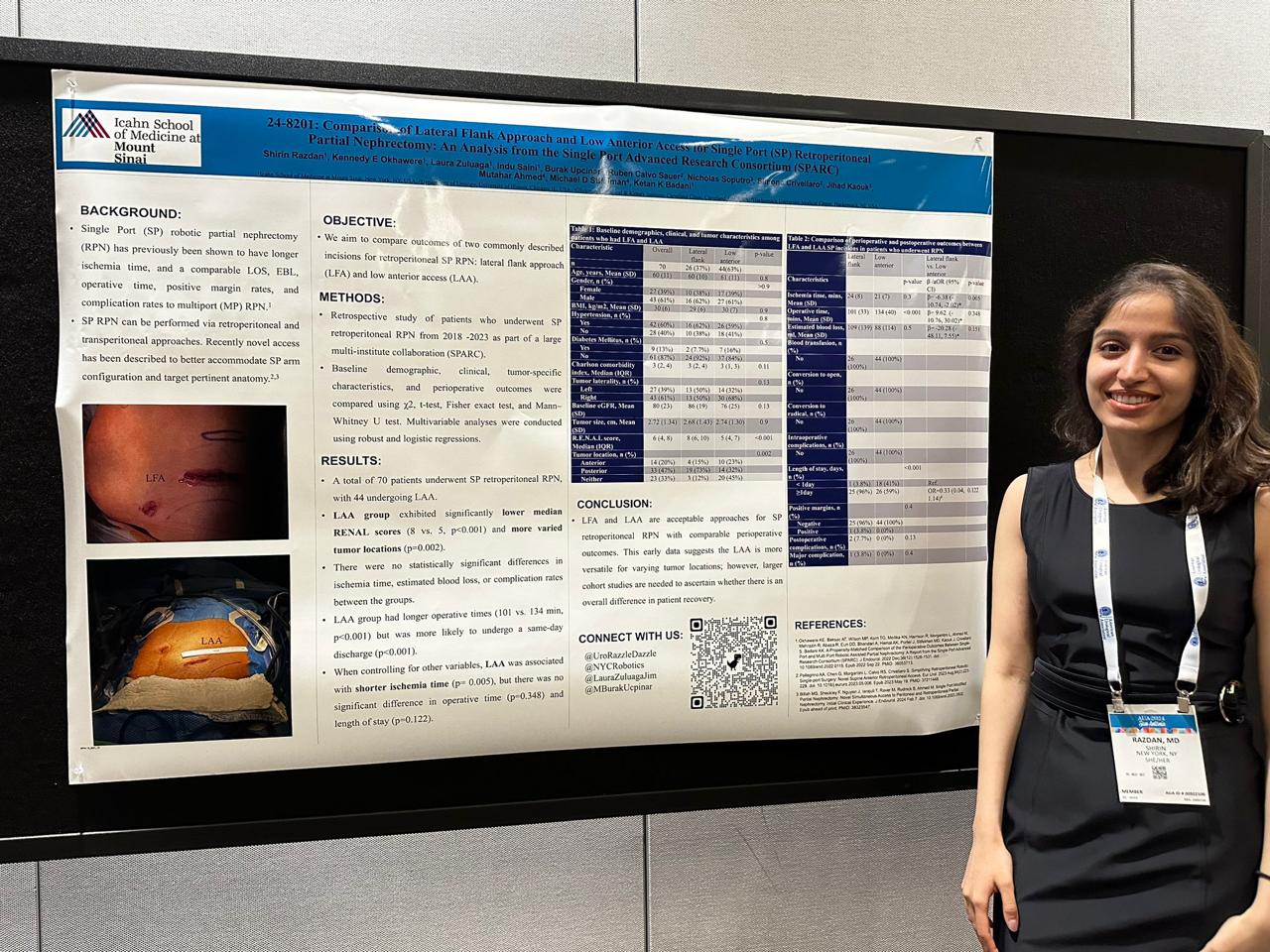
Practicing in Miami, Florida, Dr. Shirin Razdan, MD is a dual-fellowship trained, board-certified urologist specializing in advanced robotic urologic oncology and complex minimally invasive renal surgery. Having completed clinical fellowships in robotic surgery and urologic oncology at the Icahn School of Medicine at Mount Sinai in New York City, Dr. Razdan leads robotic surgery at the Comprehensive Urological Surgery Institute. Collaborating within multidisciplinary tumor boards, Dr. Razdan evaluates anatomical complexity, renal reserve, and cardiopulmonary risks to help patients navigate the choice between robotic surgical resection and non-invasive stereotactic radiation.
The Radiobiology of SBRT: Overcoming Radioresistance
The biological efficacy of SBRT differs fundamentally from conventional fractionated radiation:
- Overcoming the Repair Threshold: Standard radiation causes sublethal DNA double-strand breaks that renal clear cell tumors can often enzymatically repair between daily sessions. SBRT delivers ablative biological equivalent doses (BED >100Gy), overwhelming tumor repair mechanisms and triggering immediate cellular apoptosis and mitotic death.
- Microvascular Endothelial Collapse: Beyond direct DNA fragmentation, high single-fraction doses of stereotactic radiation cause microvascular endothelial cell damage within the tumor’s feeding vessels. This induces rapid capillary occlusion, tumor ischemia, and coagulative necrosis.
- Stereotactic Sub-Millimeter Targeting: SBRT utilizes internal fiducial markers, 4D computed tomography, and active respiratory gating to account for the kidney’s natural upward and downward motion during breathing (which can shift the organ by 1 to 3 centimeters). This sub-millimeter precision creates a steep dose drop-off, delivering tumoricidal energy to the mass while sparing the adjacent healthy kidney parenchyma and nearby retroperitoneal intestines.
Clinical Indications: Who Is a Candidate for SBRT Instead of Surgery?
Surgical extirpation—specifically robotic partial nephrectomy—remains the established curative gold standard for localized kidney tumors. However, surgery is not suitable for every individual. SBRT is an alternative under specific clinical conditions:
1. Severe Medical Comorbidities and Prohibitive Operative Risk
Many individuals diagnosed with small renal masses (SRMs, 4cm) are elderly or carry heavy cardiopulmonary burdens, such as severe coronary artery disease, congestive heart failure, severe chronic obstructive pulmonary disease (COPD), or liver cirrhosis. For these patients, the physiological risks of general anesthesia, pneumoperitoneum, and surgical stress outweigh the risks of the tumor itself. SBRT delivers local cancer control without incisions, blood loss, or general anesthesia.
2. Solitary Kidney and Pre-Existing Severe Chronic Kidney Disease (CKD)
For patients possessing a solitary functioning kidney or baseline Stage 3b/4 chronic kidney disease, temporary renal artery clamping (warm ischemia) during partial nephrectomy risks precipitating permanent dialysis dependency. SBRT ablates the tumor without interrupting renal blood flow, providing a functional, nephron-sparing alternative.
3. Anatomically Inoperable or High-Complexity Tumors in High-Risk Patients
Central, hilar, or completely endophytic tumors buried deep within the renal sinus can be technically challenging to resect without requiring a radical nephrectomy (total kidney removal). When high surgical complexity meets marginal overall health, SBRT offers non-invasive tumor destruction while preserving peripheral cortical filtration.
4. Oligometastatic Consolidation and Local Symptom Control
In metastatic kidney cancer, SBRT serves as a targeted tool to ablate solitary growing metastases (“oligoprogression”) while a patient remains on systemic immunotherapy. It is also used to resolve chronic hematuria or severe flank pain caused by an inoperable primary mass.

Comparative Overview: Robotic Partial Nephrectomy vs. Renal SBRT
| Clinical Metric | Robotic Partial Nephrectomy (Surgical Gold Standard) | Renal SBRT / SABR (Non-Invasive Alternative) |
| Primary Invasiveness | Minimally invasive (Keyhole incisions under general anesthesia) | Non-invasive (Outpatient external beams; no anesthesia) |
| Histological Confirmation | Complete physical specimen for margin and pathology verification | Relies entirely on pre-procedure percutaneous renal biopsy |
| Local Tumor Control Rate | 95% to 98% long-term local cure | 90% to 95% local disease control at 3 to 5 years |
| Impact on Renal Function | Temporary ischemia; minor permanent drop in total GFR | Gradual, minimal decline; no arterial clamping applied |
| Bleeding / Vascular Risk | Low-to-moderate operative risk (arterial pseudoaneurysm) | Zero surgical bleeding risk; safe on anticoagulants |
| Treatment Schedule | Single operative session (1–2 days hospital stay) | 1 to 5 outpatient sessions over 1 to 2 weeks |
| Post-Treatment Surveillance | Clear surgical defect on follow-up cross-sectional scans | Slow tumor involution; scans show fibrotic scar tissue |
Frequently Asked Questions (FAQ)
Is a kidney biopsy required before receiving SBRT?
Yes. In surgical resection, the excised tumor is sent directly to the pathologist to confirm histological subtype (such as clear cell, papillary, or oncocytoma) and nuclear grade. Because SBRT leaves the ablated tumor inside the body, a pre-treatment percutaneous core needle biopsy is essential to confirm malignancy and rule out benign lesions (like oncocytomas or lipid-poor angiomyolipomas) that do not require radiation.
What side effects are associated with renal SBRT?
SBRT is generally well tolerated. Most patients experience mild, temporary fatigue, nausea, or localized skin erythema during or immediately following treatment. Serious late complications—such as bowel ulceration, duodenal perforation, or ureteral strictures—occur in fewer than 2% to 3% of cases due to modern stereotactic contouring that keeps radiation doses to adjacent organs below strict tolerance limits.
How do doctors know if SBRT was successful if the tumor isn’t removed?
Unlike surgery, where the tumor is physically excised, SBRT kills cancer cells in place, causing progressive cellular necrosis. On post-treatment contrast-enhanced CT or MRI scans, successful treatment appears as a gradual loss of internal contrast enhancement (indicating loss of blood supply) and stable or slowly decreasing tumor diameter over 12 to 24 months.
Conclusion
Stereotactic Body Radiation Therapy (SBRT) has transformed the management of localized kidney cancer for medically complex individuals, dispelling the historical belief that renal cell carcinoma cannot be treated with radiation. While robotic partial nephrectomy remains the definitive standard of care for operative candidates, SBRT provides a viable, non-invasive alternative for patients facing prohibitive surgical risks, advanced chronic kidney disease, or solitary kidneys. Through careful biopsy verification, functional assessment, and multidisciplinary collaboration, Dr. Shirin Razdan ensures each patient receives an individualized, evidence-based management strategy.