


At the forefront of urologic innovation, the Single-Port Extraperitoneal Robotic Prostatectomy (SP EP‑RARP) represents a groundbreaking advancement in minimally invasive surgery for localized prostate cancer. In my latest YouTube video demonstration, I showcase the full procedural workflow—highlighting how a single small incision and extraperitoneal access can provide safer, faster recovery and a better patient experience.
What is Single-Port Extraperitoneal Robotic Prostatectomy?
Conventional robotic prostatectomy typically involves multiple instruments through five to six ports placed across the abdomen, with transperitoneal entry. In contrast, Single‑Port Robotic Radical Prostatectomy uses a single operative port that contains the camera and instruments. When combined with the extraperitoneal approach, the procedure stays confined to the space directly around the prostate—avoiding entry into the abdominal cavity altogether.
Key Surgical Advantages
- Fewer Incisions and Improved Cosmetic Outcomes
Only one small incision (about 3–4 cm) is required, usually just below the umbilicus. All robotic instruments and the camera are introduced through this single multi-channel port, significantly reducing visible scarring and tissue disruption.
- Less Pain and Narcotic Use
Multiple studies show patients report less postoperative pain with SP EP‑RARP than with multi‑port approaches. Up to two-thirds of patients avoid narcotics entirely, managing pain with ibuprofen or acetaminophen instead.
- Shorter Hospital Stay & Same-Day Discharge
Most patients are discharged within hours, often on the same day of surgery. At centers like Cleveland Clinic and Mayo Clinic, average hospital stay drops to 4–8 hours, versus more than 24 hours with multi‑port surgery.
- Avoidance of Trendelenburg Positioning
Because the extraperitoneal cavity keeps the intestines out of the surgical field, steep Trendelenburg positioning is not required. Patients recover in a flat or minimal tilt position, reducing risks of respiratory or neurologic complications.
- Excellent Visibility & Operating Control
The insufflation of the extraperitoneal space pushes the intestines downward, giving clear visualization and precision for dissection. The SP system’s articulating instruments and flexible scope allow efficient maneuvering even in tight spaces.
Surgical Workflow – Video Highlights
In the YouTube video (starting at around second 16), I demonstrate:
- A 3‑cm infra-umbilical incision followed by balloon‐assisted creation of the extraperitoneal working space
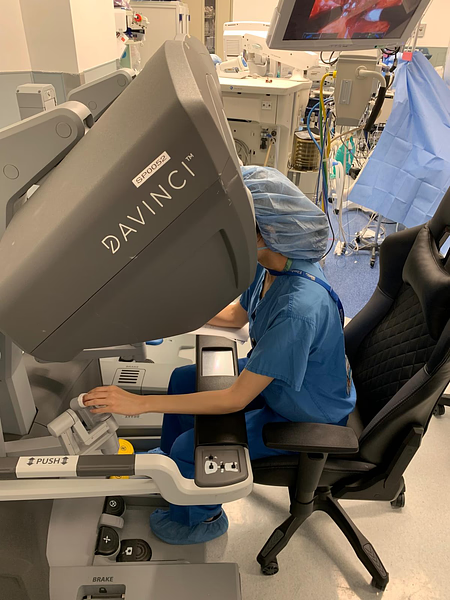
- Docking of the da Vinci SP robotic platform through a GelPOINT mini access port
- A complete retropubic dissection without entering the peritoneum
- Removal of the prostate and vesicourethral anastomosis through the same single incision
- No additional ports required, typically no drain post-op, only a Foley catheter
This streamlined approach mirrors protocols used in initial clinical series of 10 to 100 patients with zero conversions to open or multi-port surgery, minimal blood loss, and no major complications.
Clinical Outcomes & Learning Curve
Safety & Feasibility
A case series of 100 patients (Dec 2021 – Apr 2023) reported no major complications, a mean blood loss of ≈110 mL, an operating time of around 94 minutes, and 92% continence recovery within a short follow‑up.
Learning Curve Insights
Surgeons experienced in traditional robotic techniques adapted quickly, performing 25–50 SP procedures without a significant increase in operative times or margin positivity. Functional outcomes remained stable across early and later cases.
Comparative Data
Recent institution-level analysis (2015–2023) compared SP EP‑RARP to standard multi-port transperitoneal RARP. Though operative time was slightly longer (~206 vs ~155 minutes), SP EP‑RARP patients experienced shorter hospital stays (7.5 h vs 14 h) and more frequent same-day discharge. Complication rates were similar or lower, especially for bowel and respiratory morbidity.
Why Choose Single-Port Extraperitoneal Robotic Prostatectomy with Dr. Shirin Razdan?
Dr. Shirin Razdan is one of the leading urologist based in Miami. There are several reason to choose Single-Port Extraperitoneal Robotic Prostatectomy with Dr. Shirin Razdan:
- I perform every case using expert robotic technique refined over thousands of surgeries.
- The extraperitoneal route avoids bowel manipulation, abdominal adhesions, and steep positioning.
- My approach prioritizes oncologic control, nerve preservation, and early return to urinary and sexual function.
- Patients are supported with structured postoperative protocols emphasizing rapid recovery and minimal narcotic use.
Patient Journey & FAQs
Who is eligible?
Ideal candidates include men with clinically localized prostate cancer, prostate volumes under ~100 g, no prior infraumbilical midline surgeries, and those preferring a minimally invasive approach.
What’s recovery like?
- Discharge typically within hours of surgery
- Foley catheter for ~6–8 days
- Most patients return to normal activity within 1–2 weeks
- Minimal pain, often managed with over-the-counter medications
What are the risks?
Common risks mirror those of traditional prostatectomy: urinary incontinence, erectile dysfunction, bleeding, and positive surgical margins. Early data show similar or improved outcomes, but long-term data beyond 2 years is still emerging.
Conclusion
Single-Port Extraperitoneal Robotic Prostatectomy represents the next evolution in minimally invasive prostate cancer surgery—combining fewer incisions, less pain, faster recovery, and excellent functional results. My detailed video offers a clear visual guide to the entire technique, from access to prostate removal.
If you or someone you know is considering prostate cancer surgery and values advanced, patient-focused care, I invite you to schedule a consultation. Learn how this state-of‑the‑art SP EP‑RARP can support your path to recovery and quality of life.