


If you’ve noticed a new curve, indentation, or lump when you’re erect, you’re dealing with something more common than most men realize. Medical experts estimate that 6% to 15% of men between the ages of 40 and 70 have Peyronie’s disease — and because embarrassment keeps many men from bringing it up, the real number is likely higher. This guide covers exactly how treatment works, when non-surgical options make sense, when surgery is the right call, and what to expect at each stage — with real numbers, not vague reassurance.
Dr. Shirin Razdan is a board-certified Miami urologist offering the full range of treatment for Peyronie’s disease, from FDA-approved injections to robotic-assisted, minimally invasive surgery for erectile dysfunction and penile straightening. Here’s what you need to know before your first appointment.
Peyronie’s Disease: Quick Facts
| Statistic | What the Data Shows |
| Prevalence (ages 40–70) | Estimated 6% to 15% of men in this age range |
| Men with no memory of an injury | Up to 80% don’t recall a specific traumatic event |
| Calcium deposits in scar tissue | About 1 in 3 men with the condition |
| ED risk with diabetes | Men with diabetes-related ED are 4 to 5 times more likely to develop Peyronie’s disease |
| Curve that typically impairs sex | Greater than 30 degrees |
| Possible length loss (severe cases) | Roughly 0.5 cm to 1.5 cm |
| Acute phase duration | Typically 6 to 18 months, depending on the individual |
| Men eventually needing surgery | Roughly one-third, usually for persistent curvature or sexual dysfunction |
Understanding Peyronie’s Disease
Peyronie’s disease develops when fibrous scar tissue — called plaque — forms inside the penis, most often on the sheath surrounding the erectile tissue (the tunica albuginea). As the scar tissue contracts, it pulls one side of the penis tighter than the other, creating a bend, indentation, or “hourglass” narrowing during erection. It can also cause pain, loss of length or girth, and softer erections.
The exact cause isn’t always clear. The leading theory points to small, unrecognized injuries during intercourse that heal abnormally — which is why most men (up to 80%) never remember a specific traumatic event. Genetics, connective tissue disorders like Dupuytren’s contracture, and diabetes-related erectile dysfunction all raise the risk.
Acute vs. Chronic Phase: Why Timing Changes Treatment
Peyronie’s disease progresses through two distinct stages, and which one you’re in determines what treatment makes sense.
| Acute Phase | Chronic Phase | |
| Duration | Roughly 6 to 18 months | Begins once the curve and symptoms stabilize |
| What’s happening | Scar tissue is actively forming; curvature and pain may keep changing | Scar tissue stops growing; curve size holds steady |
| Pain | Common, especially during erection | Usually resolved, though some men still experience it |
| Recommended treatment | Traction therapy, oral or injectable medications | Injections, traction, or surgery once stable for 3–6 months |
| Is surgery appropriate? | No — operating during active scarring raises the risk of needing a second surgery | Yes, once pain has resolved and the curve hasn’t changed for 3 to 6 months |
Non-Surgical Treatment Options
| Treatment | How It Works | What to Know |
| Collagenase injections (Xiaflex) | The only FDA-approved medication for Peyronie’s disease; breaks down the collagen buildup causing the curve | Typically given as two injections per week for up to 8 weeks; most effective for curves greater than 30 degrees with a palpable lump |
| Verapamil injections | Disrupts scar tissue formation and may reduce pain | Given over multiple sessions; often combined with traction therapy |
| Interferon injections | Reduces inflammation and helps break down fibrous tissue | Also shown to ease penile pain in some patients |
| Penile traction therapy | A wearable device gently stretches the penis, encouraging scar tissue to remodel | Requires daily use — anywhere from 30 minutes to several hours — often for months; the only treatment shown to help restore lost length |
| Oral medications | Tadalafil, pentoxifylline, and others aimed at improving blood flow | Not proven to reliably reduce curvature on their own; generally not used once the chronic phase begins |
When to Consider Surgery
Surgery becomes the appropriate choice when:
- The curve is severe enough (typically over 30 degrees) to make intercourse difficult or impossible
- You’ve reached the chronic phase — curvature and symptoms stable for at least 3 to 6 months, with pain resolved
- Non-surgical treatments haven’t produced enough improvement
- Peyronie’s disease is combined with erectile dysfunction that doesn’t respond to medication
Roughly one-third of men with Peyronie’s disease eventually have surgery, most often because of persistent curvature or the impact on sexual function. Most experts still recommend starting with non-surgical options, especially early on, since surgery isn’t recommended until the disease has been present for at least 9 to 12 months and stopped progressing.
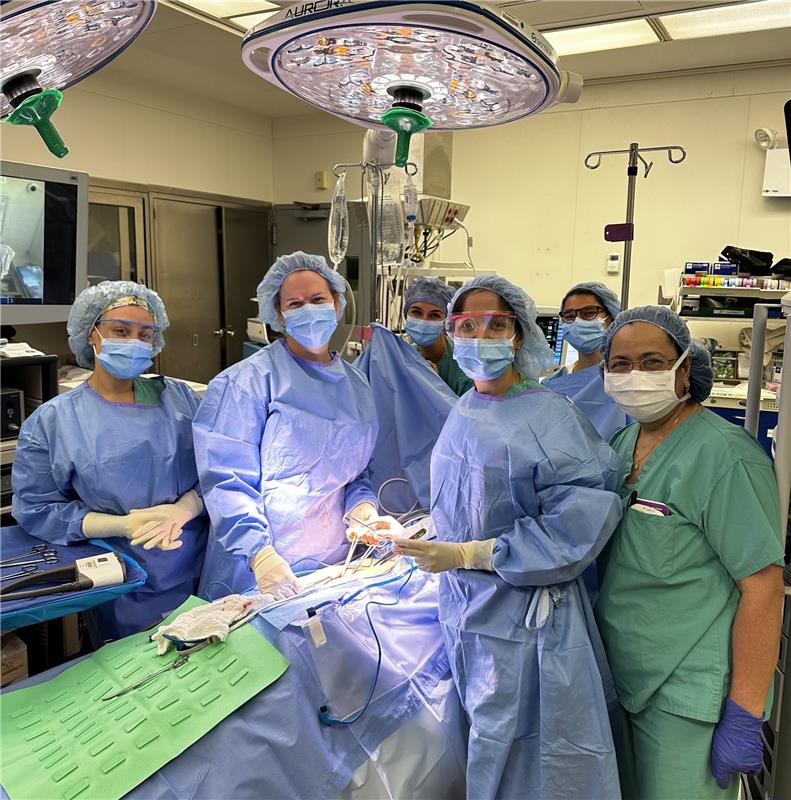
Surgical Treatment Options
| Procedure | Best For | What to Know |
| Plication (suturing the unaffected side) | Mild-to-moderate curves with adequate erectile function | Shortens the longer side of the penis to match the curved side; simpler recovery, but final length depends on the shorter, affected side |
| Incision/excision and grafting | More severe curvature, narrowing, or indentation | Scar tissue is cut or removed and a graft is placed to let the sheath stretch; preserves length better than plication but carries higher risk of erectile changes |
| Penile implant surgery | Men with Peyronie’s disease and erectile dysfunction together | An inflatable or semi-rigid penile implant straightens the penis and restores rigid erections in one procedure; typically takes 45–60 minutes under general anesthesia |
Dr. Razdan’s use of robotic-assisted and minimally invasive techniques allows for more precision, smaller incisions, and generally faster recovery than traditional open approaches. For a deeper look at how each surgical approach is chosen, see our full guide to surgical treatment for Peyronie’s disease.
Risks to Discuss With Your Surgeon
| Risk | Notes |
| Loss of penile sensation | Can occur, particularly with excision and grafting techniques |
| Additional shortening | Most associated with plication; length depends on the unaffected side’s length |
| Erectile dysfunction | Possible with any surgical approach; often a key reason implants are chosen when ED already coexists |
| Infection | Standard surgical risk, managed with pre-operative precautions |
| Recurrent curvature | Rare, but possible with any surgical technique |
Recovery Timeline
- Non-surgical treatment: Injections typically require multiple sessions over 6 to 8+ weeks before results are apparent; traction therapy needs months of consistent daily use
- Plication surgery: Around 2 to 4 weeks before resuming normal activity
- Grafting or implant surgery: Roughly 4 to 6+ weeks, with many patients going home the same day or after one overnight stay
- Sexual activity after surgery: Most surgeons recommend waiting 4 to 8 weeks regardless of the procedure performed
Getting Diagnosed
Diagnosis is typically straightforward: a physical exam to locate and measure scar tissue, sometimes combined with an at-home photo of the erect penis or an in-office injection to induce a temporary erection for evaluation. A penile Doppler ultrasound may be used to assess blood flow, scar location, and calcium buildup — all of which help determine which treatment is likely to work best. If you’re unsure whether your symptoms need evaluation, our guide on Peyronie’s disease symptoms and causes covers what to watch for, including patterns of penile curvature and penile pain that warrant a visit.
Why Miami Patients Choose Dr. Shirin Razdan
Peyronie’s disease affects more than the physical — it can take a real toll on confidence and relationships. Dr. Razdan’s approach combines board-certified expertise in robotic and prosthetic urology with individualized treatment plans built around your specific curvature, symptoms, and goals. If you’re weighing your options or unsure which specialist to see, our guide to finding the right Peyronie’s disease doctor can help — or learn more directly on our Peyronie’s disease specialist in Miami page.
Frequently Asked Questions
How common is Peyronie’s disease really?
Studies estimate 6% to 15% of men between ages 40 and 70 are affected, though the true number is likely higher since many men are too embarrassed to bring it up with a doctor.
Will my Peyronie’s disease go away without treatment?
Some mild cases improve on their own, especially early on. But it’s uncommon for a significant curve or thick scar tissue to resolve completely without treatment, and waiting can allow symptoms to become more established.
What’s the best non-surgical treatment for Peyronie’s disease?
Collagenase (Xiaflex) is the only FDA-approved injectable medication and is most effective for curves greater than 30 degrees with a palpable lump. It’s often combined with traction therapy for better results, since traction is the only non-surgical option shown to help restore lost length.
When is surgery the right choice for Peyronie’s disease?
Surgery is generally recommended once the disease has stabilized for 3 to 6 months (usually 9 to 12 months after symptoms began), pain has resolved, and the curve is severe enough to interfere with intercourse or non-surgical treatments haven’t worked.
Does Peyronie’s disease surgery affect penis length?
It can. Plication procedures shorten the longer side of the penis to match the affected side, so some length loss is expected. Grafting techniques are often chosen specifically to better preserve length in more severe cases.
Can Peyronie’s disease be treated alongside erectile dysfunction?
Yes — this is actually one of the more common scenarios. A penile implant can correct curvature and restore reliable erections in a single procedure, making it a preferred option for men with both conditions together.
How long does recovery take after Peyronie’s disease surgery?
Plication typically allows a return to normal activity within 2 to 4 weeks. Grafting and implant procedures generally take 4 to 6 weeks or more, with most surgeons recommending men wait 4 to 8 weeks before resuming sexual activity.
Is Peyronie’s disease a sign of something more serious?
Peyronie’s disease itself isn’t dangerous or linked to cancer, but it can be associated with underlying risk factors like diabetes-related erectile dysfunction or connective tissue disorders — which is part of why a full evaluation is worthwhile rather than assuming it will resolve on its own.