The evolution of urologic surgery over the past three decades has continuously progressed toward minimizing surgical trauma while maintaining uncompromising oncological and reconstructive precision. The transition from large, muscle-splitting open incisions to standard multi-port robotic laparoscopy represented a monumental breakthrough, replacing foot-long surgical wounds with five to six separate keyhole incisions spread across the abdominal wall.
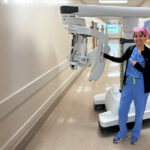
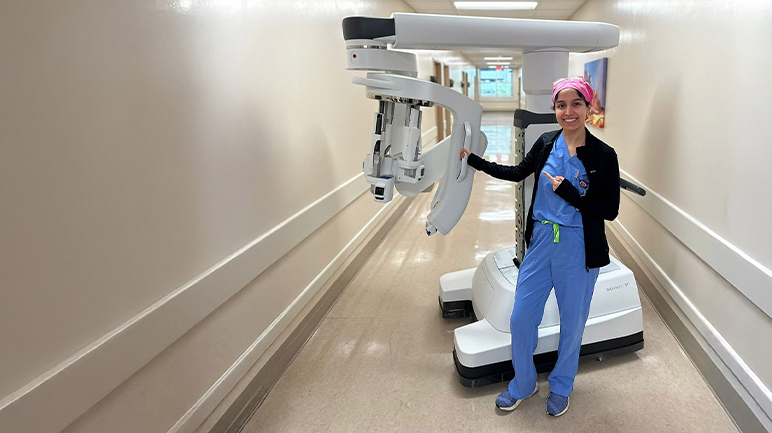
However, modern robotic engineering has raised the bar even further with the introduction of the da Vinci Single Port (SP®) Surgical System. Instead of scattering multiple trocars across the abdomen, the SP platform routes an entire suite of articulating instruments and a flexible 3D high-definition camera through a single 2.5-centimeter entry point.
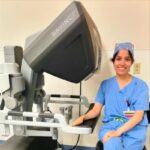
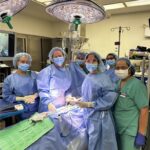
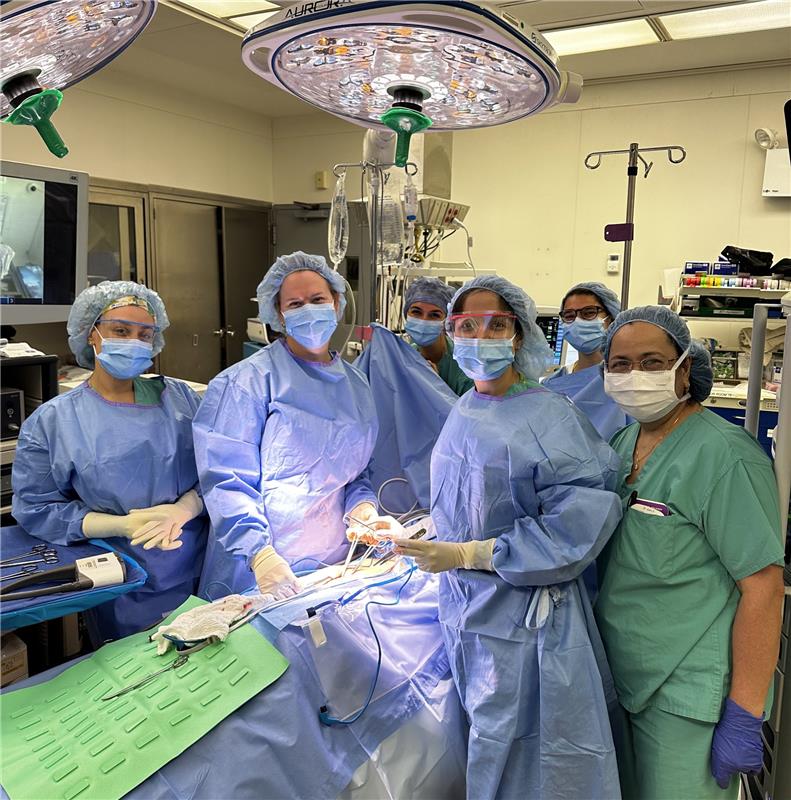
At Miami Robotic Surgery within the Comprehensive Urologic Surgery Institute in South Florida, Dr. Shirin Razdan serves as a leading specialist in Single-Port robotic urology. Fellowship-trained in robotic surgery and urologic oncology at the Icahn School of Medicine at Mount Sinai in New York—where she co-authored key academic chapters on single-port robotic reconstruction—Dr. Razdan leverages single-port technology to provide South Florida patients with faster recoveries, minimal postoperative discomfort, and virtually scarless aesthetic outcomes.
The Engineering Breakthrough: Multi-Port vs. Single-Port (SP)
Standard multi-port robotic platforms (such as the da Vinci Xi) require separate puncture sites across the patient’s abdomen: one for the 3D endoscope, two or three for robotic instrument arms, and one or two for surgical bedside assistants. While highly effective, each trocar must pierce the abdominal wall musculature and fascia, creating multiple potential sources of postoperative pain, bruising, and incisional hernia risk.
[STANDARD MULTI-PORT ROBOTICS (Xi)]
──► 5 to 6 discrete abdominal incisions (spread across the upper/lower abdomen)
──► Straight instrument shafts requiring wide triangulation space
──► Dispersed muscle trauma across several abdominal quadrants
VS.
[DA VINCI SINGLE PORT (SP) PLATFORM]
──► 1 single 2.5 cm entry cannula (hidden within the natural umbilical fold)
──► Double-jointed (“elbow & wrist”) instruments navigating narrow anatomical corridors
──► True muscle-sparing access with centralized, minimal tissue disruption
How the SP Technology Works:
- The Single 2.5 cm Cannula: A single multichannel port is placed through one incision—typically concealed directly inside the belly button (umbilicus) or placed in the lower pfannenstiel line.
- Double-Jointed Articulation: Once inside the patient, the instruments do not remain rigid. Engineered with internal mechanical “elbows” and “wrists,” the SP robotic arms deploy and triangulate within deep, narrow anatomic corridors.
- Flexible 3D Endoscope: Unlike rigid multi-port laparoscopes, the SP camera is an articulating “snake-like” digital optical system that can bend to look around structural obstacles and view critical anatomy from angles previously impossible without moving ports.
Clinical Advantages of Single-Port Surgery for Patients
By consolidating complex urologic operations into a single micro-incision, the da Vinci SP platform delivers concrete clinical benefits:
[Single Umbilical Incision] ──► Preserves Abdominal Wall Muscle Integrity
│
├─► Substantial Reduction in Post-Op Pain & Narcotic Use
├─► Same-Day Outpatient Discharge or Brief 24-Hr Stay
├─► Rapid Mobilization & Early Return to Full Activity
└─► Hidden “Scarless” Cosmetic Outcome in Natural Creases
- Muscle-Sparing & Narcotic-Free Recovery: Avoiding five or six separate punctures through the rectus and oblique muscles dramatically diminishes post-surgical abdominal wall soreness. Most SP patients manage post-operative recovery primarily with non-opioid regimens (acetaminophen and NSAIDs).
- Decreased Risk of Incisional Hernias: Every puncture through the abdominal fascia represents a potential weak point for future herniation. A single, centrally repaired umbilical incision minimizes cumulative fascial defects.
- Accelerated Mobilization: Without multi-quadrant abdominal soreness, patients stand, walk, and navigate stairs within hours of leaving the operating room. Early ambulation stimulates gastrointestinal peristalsis (preventing post-op ileus) and lowers deep vein thrombosis (DVT) risks.
- Superior Cosmetic Results: Because the single incision is frequently nestled within the natural contours of the belly button, the surgical site often becomes virtually imperceptible once fully healed.
Urologic Procedures Performed via Single-Port Robotics
Dr. Shirin Razdan utilizes the da Vinci SP system across an expanding spectrum of complex oncological and reconstructive urologic conditions:
┌──► 1. SP Robotic Prostatectomy (Prostate Cancer)
│ ──► Extraperitoneal access without entering peritoneal bowel cavity
│
[SP UROLOGIC APPLICATIONS] ───────┼──► 2. SP Robotic Partial Nephrectomy (Kidney Tumors)
│ ──► Direct retroperitoneal tumor excision & nephron preservation
│
└──► 3. SP Reconstructive Pyeloplasty & Ureteral Repair
──► Dismembered reconstruction for UPJ obstructions through 1 site
1. Single-Port Radical Prostatectomy
In selected prostate cancer cases, the SP system allows for a transvesical or extraperitoneal approach. By operating entirely within the preperitoneal space beneath the abdominal muscles, Dr. Razdan avoids entering the peritoneal bowel cavity entirely. This eliminates bowel-related complications, reduces postoperative gas pain, and allows many patients to return home the very same day.
2. Single-Port Robotic Partial Nephrectomy
For localized small renal masses, the SP robot enables direct retroperitoneal access to the kidney without having to mobilize or retract the colon, liver, or spleen. Tumor enucleation and two-layer renorrhaphy are performed through the single site with minimal blood loss and maximal nephron preservation.
3. Reconstructive Ureteral Surgery & Pyeloplasty
Congenital or acquired Ureteropelvic Junction (UPJ) obstructions and ureteral strictures are repaired by dismembering, spatulating, and suturing the urinary tract with fine absorbable sutures—all conducted through a single hidden port.
Comparative Overview: Standard Multi-Port vs. Dr. Shirin Razdan’s Single-Port (SP) Protocol
| Surgical Metric | Conventional Multi-Port Robotics (Xi) | Dr. Shirin Razdan’s Single-Port (SP) Protocol |
| Abdominal Incisions | 5 to 6 distinct keyhole puncture wounds | 1 single 2.5 cm incision (umbilical or pfannenstiel) |
| Peritoneal Cavity Entry | Almost always transperitoneal | Option for true extraperitoneal / retroperitoneal care |
| Post-Operative Pain Profile | Moderate soreness across multiple muscle sites | Significantly reduced; narcotic-sparing protocol |
| Hospital Stay | Typically 1 to 2 inpatient days | Same-day discharge or brief 24-hour observation |
| Cosmetic Healing | Visible small scars across upper/lower abdomen | Virtually invisible / concealed inside belly button |
| Return to Light Activity | 2 to 4 weeks | Often within 1 to 2 weeks |
Conclusion
Minimally invasive urologic surgery is no longer defined merely by avoiding large incisions—it is defined by maximizing precision while eliminating unnecessary surgical trauma. Through the da Vinci Single Port (SP) platform, Dr. Shirin Razdan delivers advanced oncologic and reconstructive solutions through a single hidden incision, helping patients get back to their lives faster, with less pain, and without extensive scarring.
- Surgeon: Dr. Shirin Razdan, MD
- Specialty: Fellowship-Trained Robotic Urologic Surgeon & Urologic Oncologist
- Practice: Miami Robotic Surgery / Comprehensive Urologic Surgery Institute
- Office Location: 3650 NW 82nd Avenue, Suite 502, Doral/Miami, FL 33166
- Official Website:miamiroboticsurgery.com
- Direct Consultations: (305) 468-3314